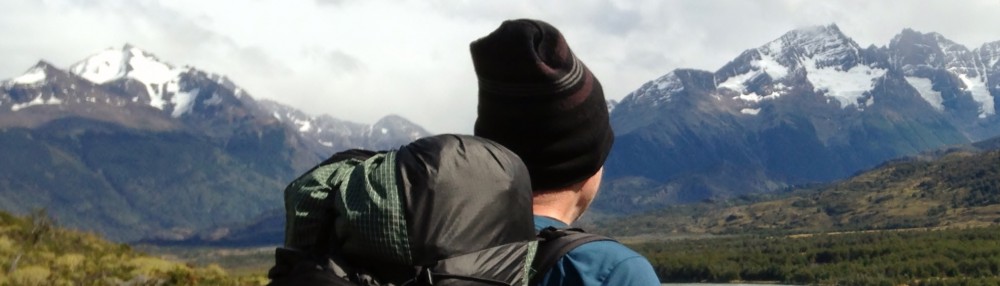
Torres del Paine lies at the Southern tip of the Andes in Chile. Within the park are some of the most impressive mountain sights in the Southern Hemisphere as well as some of the world’s most iconic trekking routes. The park draws approximately 100,000 visitors per year, who come to see the Paine Towers, Los Cuernos, French Valley and Grey Glacier. The W Trek and the Paine Circuit or Q Trek are two of the most popular routes. The park is set up so that people of all ages physical ability can take advantage of the parks beauty. At many of the campsites there are lodges called Refugios with hotel accommodations, restaurant and camping rental equipment. Visitors can choose to hike independently and be self sufficient or they can go with a guided group. They can make reservations at a refugio and sleep in a bed at night or rent a tent from the refugio and camp at the campsite. This is much more expensive. However, it makes hiking much easier when you don’t have to carry your tent, sleep mattress, cook stove and food. I did the Q Trek, which usually takes from 8 to 10 days to complete.
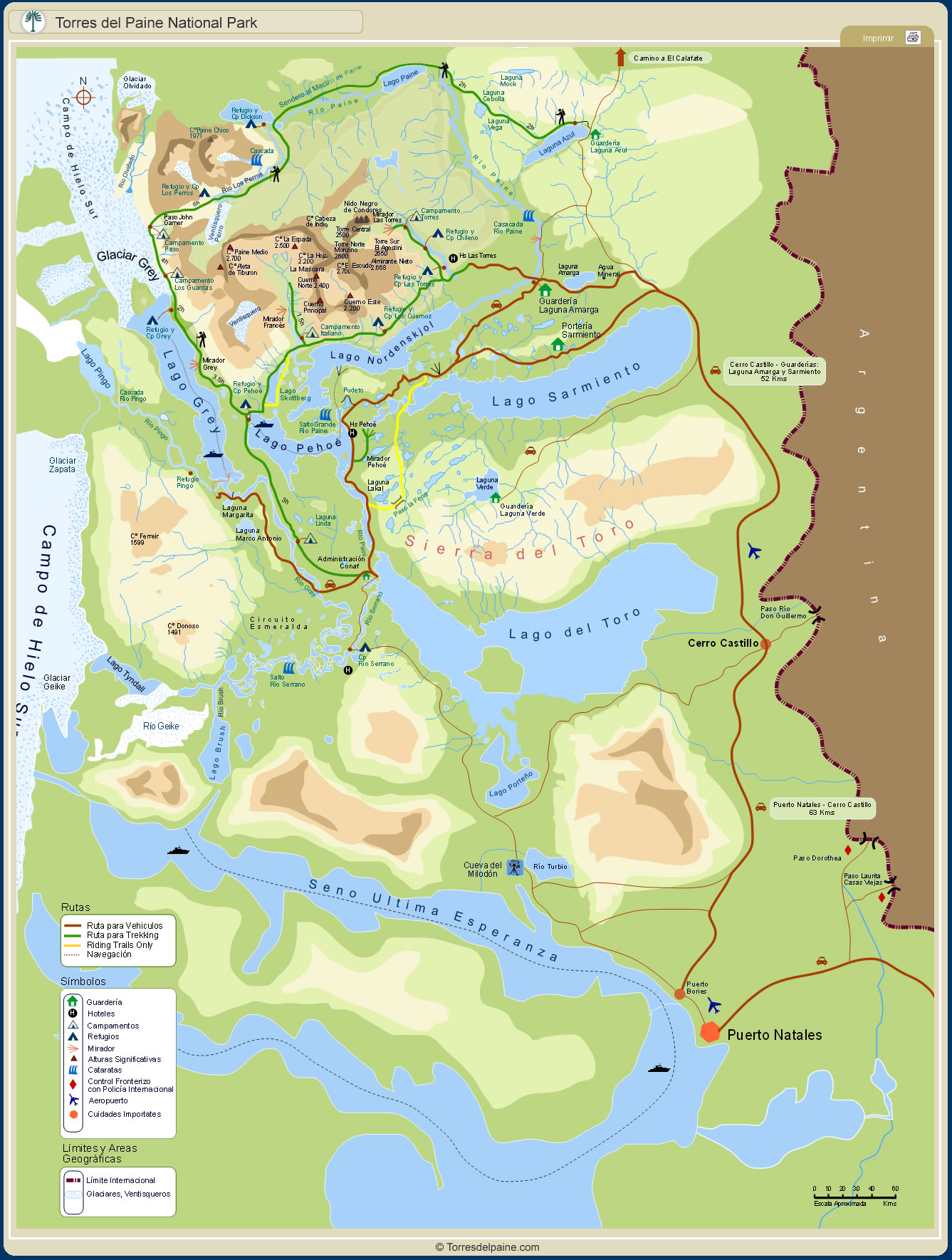
Click To Enlarge
How to get there: Torres del Paine National Park is located in southern Chile in the Andes Mountain Range. To get there from Lima, Peru I flew to Punta Arenas, Chile with a layover in Santiago. I then took a bus approximately 70 miles to Puerto Natales, Chile, which is the closest town outside of the National Park. Several busses run daily from Puerto Natales to TDP park entrance. You can fly directly into Punta Arenas, from the US. However I found those flights to be very expensive. Most of the people I met flew to Punta Arenas from Santiago or Buenos Aires.

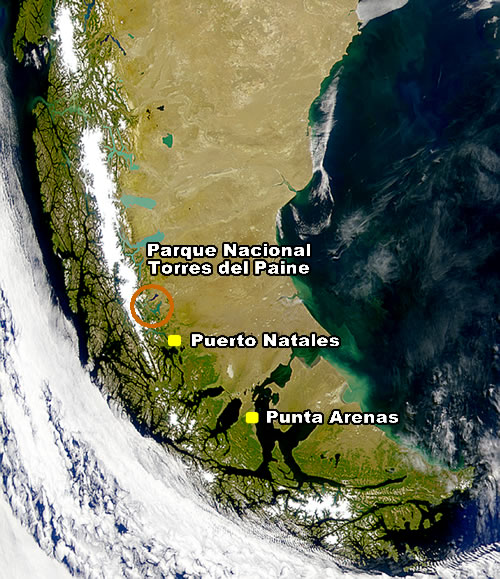
Puerto Natales, Chile is the gateway to TDP. The town was originally a small fishing village but now feeds off of tourism and services backpackers and tourists traveling to TDP. It’s a small town with lots of hostels (including Erratic Rock Hostel), budget guest houses and small restaurants. It also has several retail shops which sell or rent camping equipment and clothing. You can buy or rent all of your supplies here before before your trip to TDP. Also, most hostels rent equipment and supplies. There is a large Unimarc grocery store and several small fresh produce stores, which also sell dried fruits and granola type snack food. Many of the people I met in the park rented tents, sleeping pads, stoves etc in PN, which is convenient if you are traveling to other locations afterwards and won’t be camping. Just be aware, all of the the rental equipment is bomb proof and HEAVY. I hiked with 2 women who rented all of their equipment and were struggling will full backpacks, each weighing more than 40 lbs. In comparison, my total pack weight, including 1 liter of water and 5 days of food was 22 lbs. More about this later
 IWalk
IWalk 