Parque Nacional Torres del Paine, Patagonia Chile

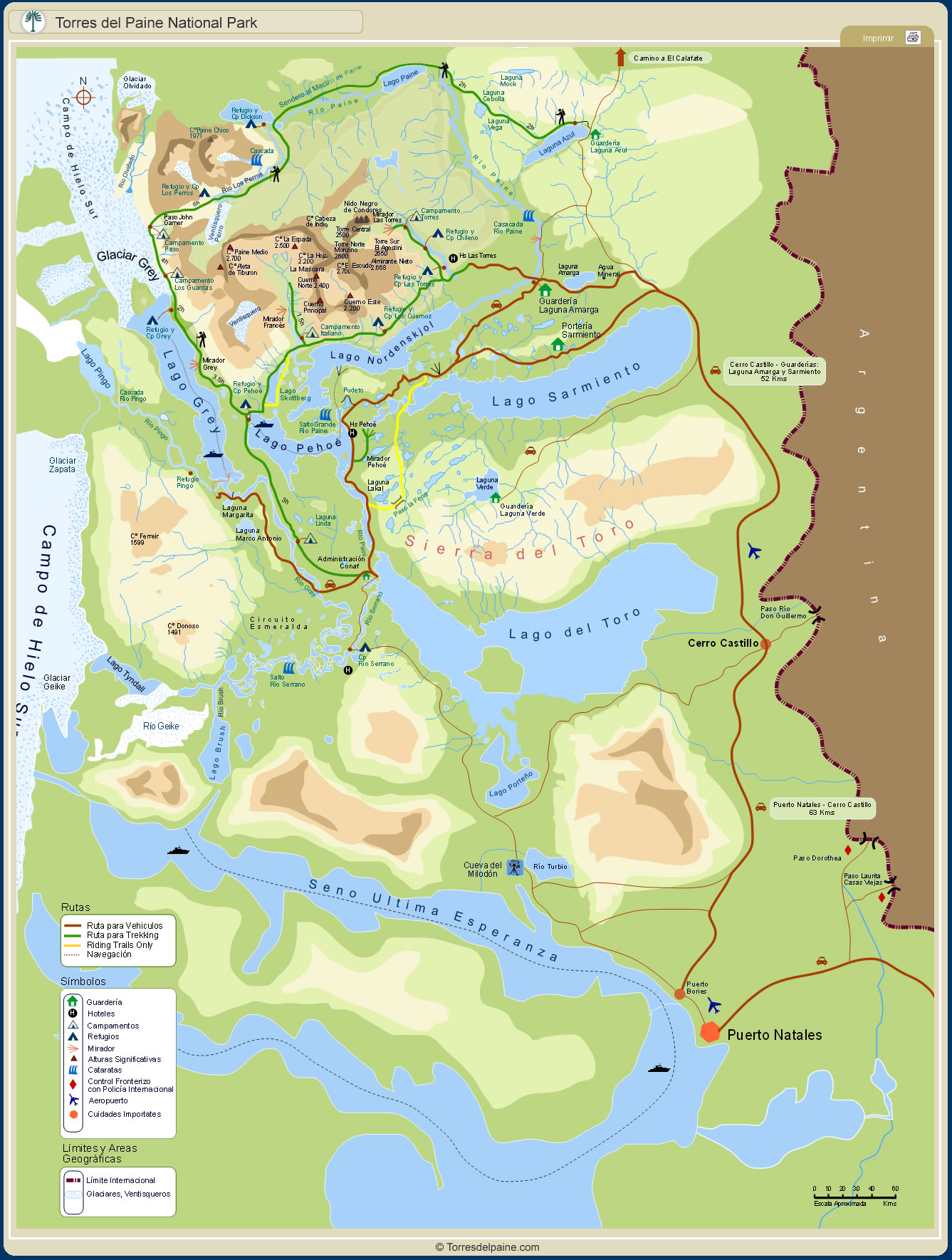
Torres del Paine lies at the Southern tip of the Andes in Chile. Within the park are some of the most impressive mountain sights in the Southern Hemisphere as well as some of the world’s most iconic trekking routes. The park draws approximately 100,000 visitors per year, who come to see the Paine Towers, Los Cuernos, French Valley and Grey Glacier. The W Trek and the Paine Circuit or Q Trek are two of the most popular routes. The park is set up so that people of all ages physical ability can take advantage of the parks beauty. At many of the campsites there are lodges called Refugios with hotel accommodations, restaurant and camping rental equipment. Visitors can choose to hike independently and be self sufficient or they can go with a guided group. They can make reservations at a refugio and sleep in a bed at night or rent a tent from the refugio and camp at the campsite. This is much more expensive. However, it makes hiking much easier when you don’t have to carry your tent, sleep mattress, cook stove and food.  I did the Q Trek, which usually takes from 8 to 10 days to complete.
Click To Enlarge

Click To Enlarge

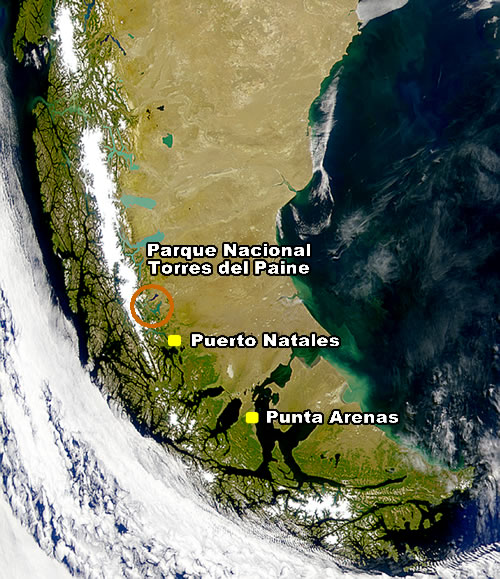
How to get there: Torres del Paine National Park is located in southern Chile in the Andes Mountain Range. To get there from Lima, Peru I flew to Punta Arenas, Chile with a layover in Santiago. I then took a bus approximately 70 miles to Puerto Natales, Chile, which is the closest town outside of the National Park. Several busses run daily from Puerto Natales to TDP park entrance. You can fly directly into Punta Arenas, from the US. However I found those flights to be very expensive. Most of the people I met flew to Punta Arenas from Santiago or Buenos Aires.

Screenshot (22)


TDP How to get there


Puerto Natales, Chile  is the gateway to TDP. The town was originally a small fishing village but now feeds off of tourism and services backpackers and tourists traveling to TDP. It’s a small town with lots of hostels (including Erratic Rock Hostel), budget guest houses and small restaurants. It also has several retail shops which sell or rent camping equipment and clothing. You can buy or rent all of your supplies here before before your trip to TDP. Also, most hostels rent equipment and supplies. There is a large Unimarc grocery store and several small fresh produce stores, which also sell dried fruits and granola type snack food.  Many of the people I met in the park rented tents, sleeping pads, stoves etc in PN, which is convenient if you are traveling to other locations afterwards and won’t be camping. Just be aware, all of the the rental equipment is bomb proof and HEAVY. I hiked with 2 women who rented all of their equipment and were struggling will full backpacks, each weighing more than 40 lbs. In comparison, my total pack weight, including 1 liter of water and 5 days of food was 22 lbs. More about this later

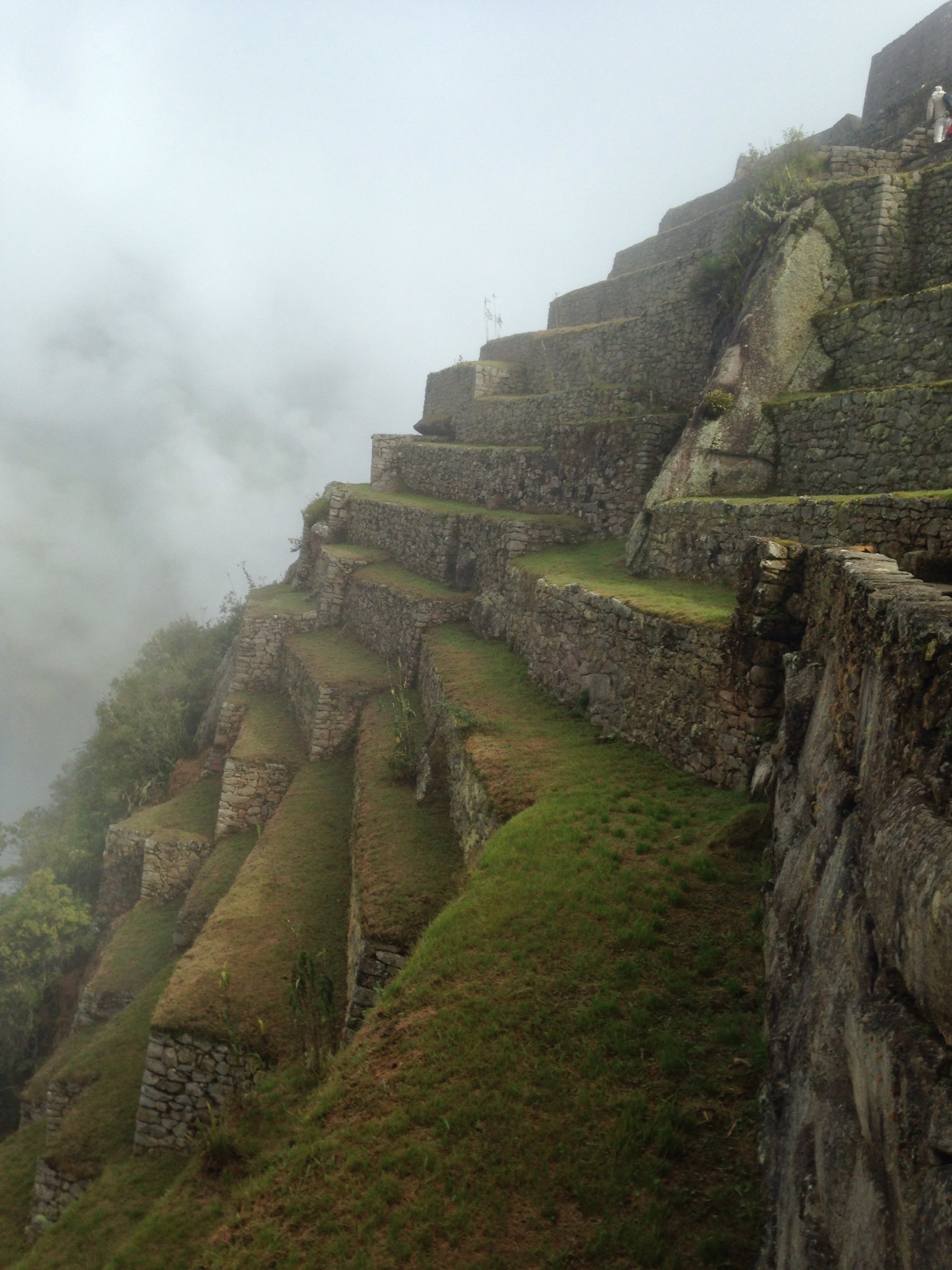
Machu Picchu

Aguas Calientes is a small town which lies in a deep gorge, approx 3 miles beneath the ruins of Machu Picchu. The town basically serves as a terminal for Peru Rail and is the principal access point for anyone visiting Machu Picchu. The gorge is beautiful but the town is nothing but restaurants and hotels, with lots of construction trying to keep up with the huge influx of tourists. It’s a necessary evil if you want to see MP. I stayed here one night and enjoyed the hot springs after my visit to MP before boarding the train back to Cusco.


AC Train Pic


My tickets through Aita Peru included a guided 2 hour tour of Machu Picchu beginning at 7am. You have two options to get to the entrance of MP: 1) You can take a bus, which leave AC starting at 6am throughout the day.  2) You can hike 3 miles on a trail straight up with no switchbacks. I chose the latter because I wanted to see the sunrise at 6am.  The night before I packed a sandwich, snacks and water in my day pack. The next morning I woke up at 4:30, left a bag at the front desk of the hotel with a change of clothes and started following the trail out of town in the dark with my headlamp. Actually, I just followed the line of lights from other eager tourists in front of me. I was told that it took approx 45 minutes to hike to the entrance.
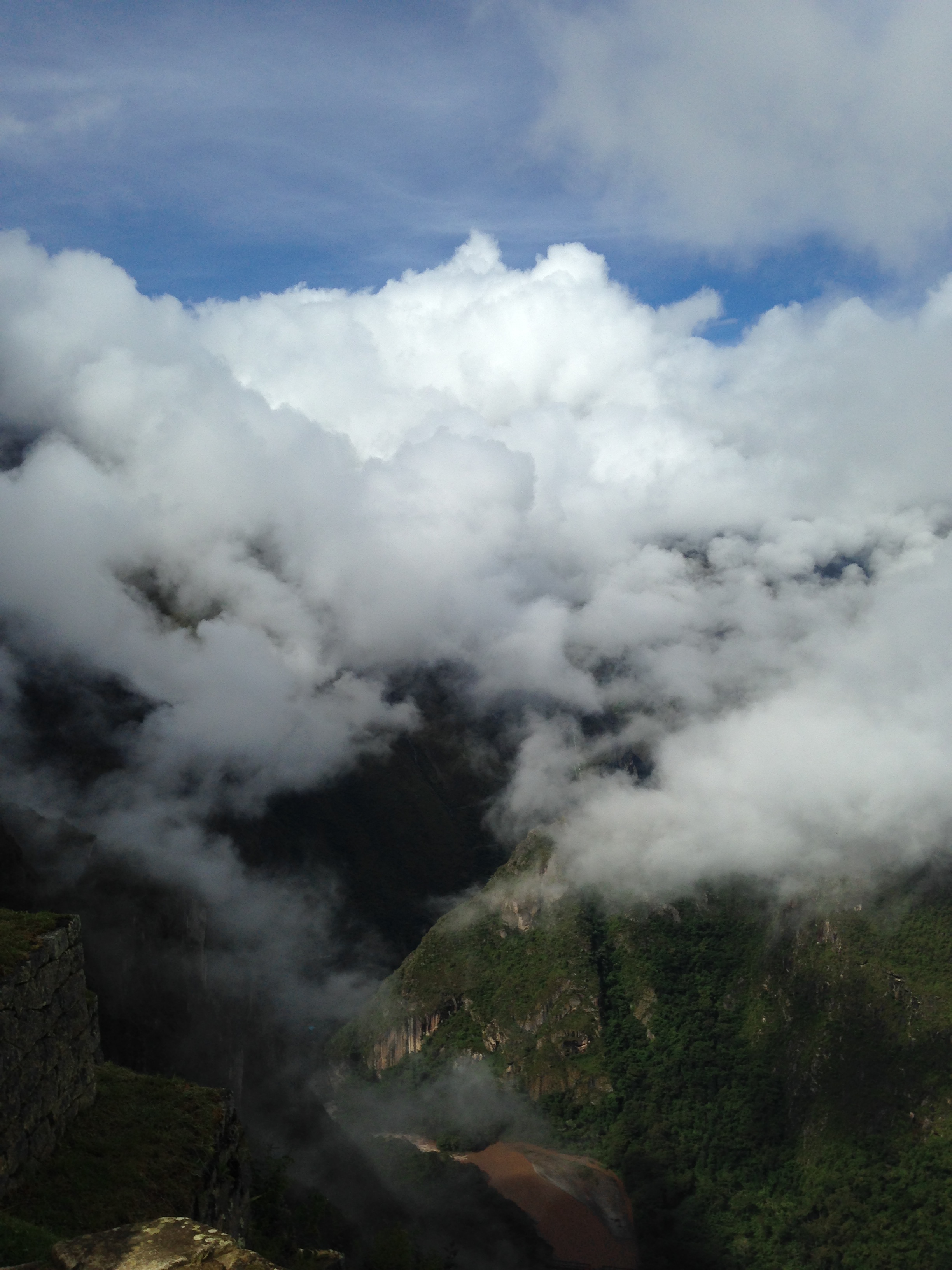
After 15 minutes I was dripping with sweat. By the time I reached the entrance at 6:10. I only beat the first bus by 5 minutes. My clothes were drenched with sweat and rain from a light drizzle. The passengers getting off the bus were dry and fresh and most were still eating their breakfast to go. I walked through the entrance but the entire mountain was engulfed in a thick cloud so I walked back and waited for my tour guide, rethinking my choice to hike vs sleeping in and riding the bus. The clouds added to the beauty in the morning and by 10am we had clear skies for my climb up

My first view of the ruins as the clouds began to clear at 7am

image

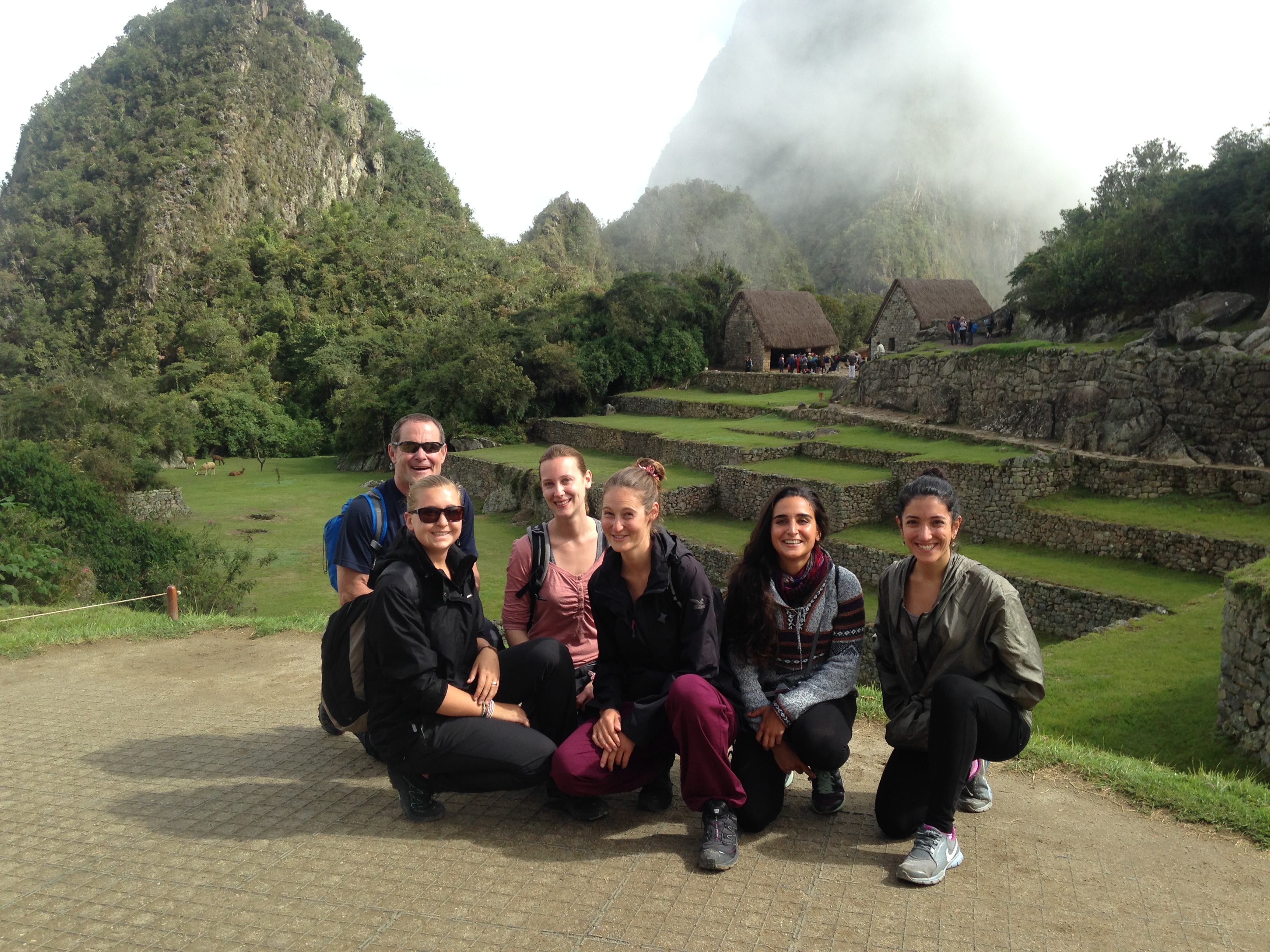
Chillin with a few of my friends

2015-03-04 08.59.05

MP green lawn

mp3 Serrated edges

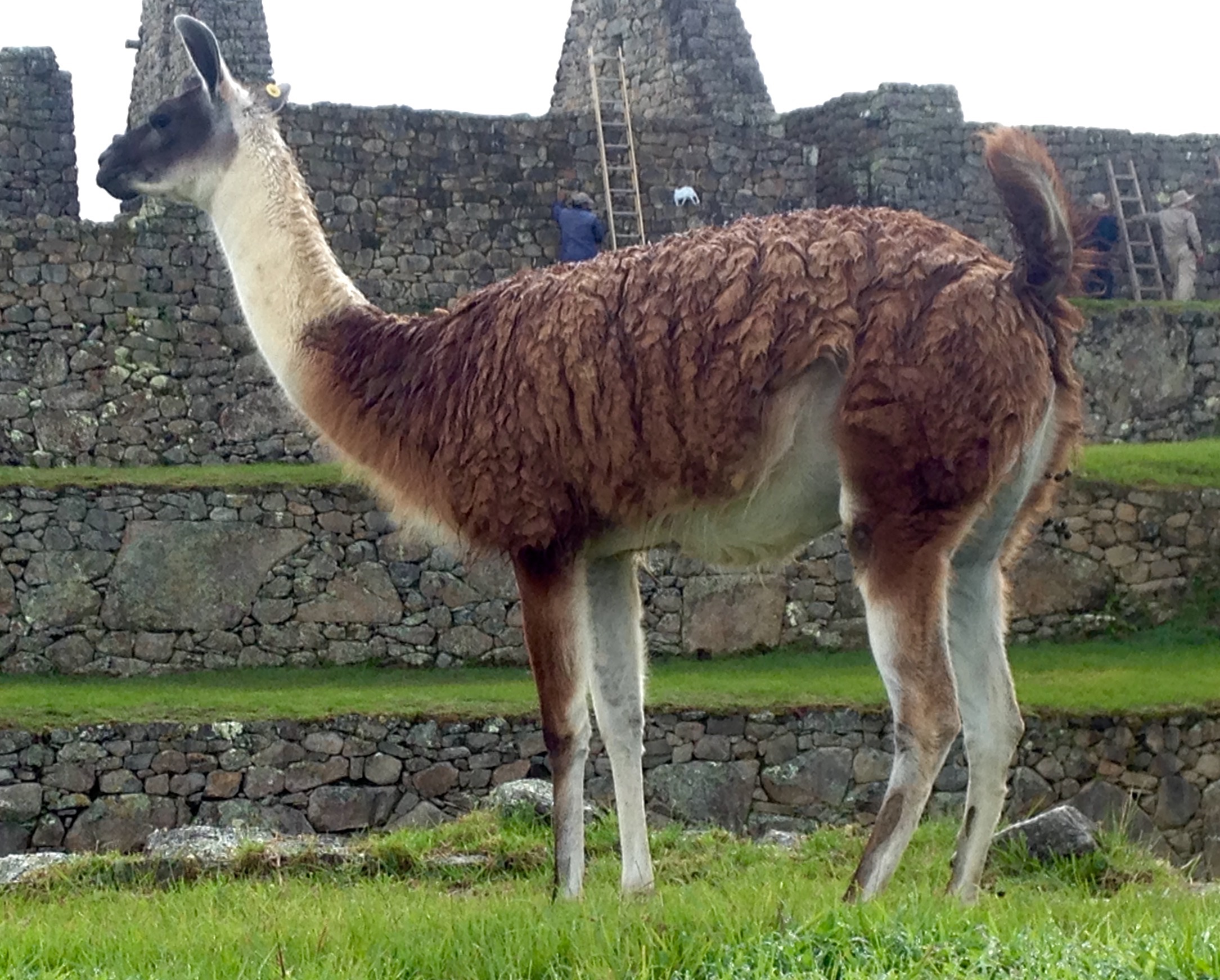
Llamas graze throughout the ruins.

image

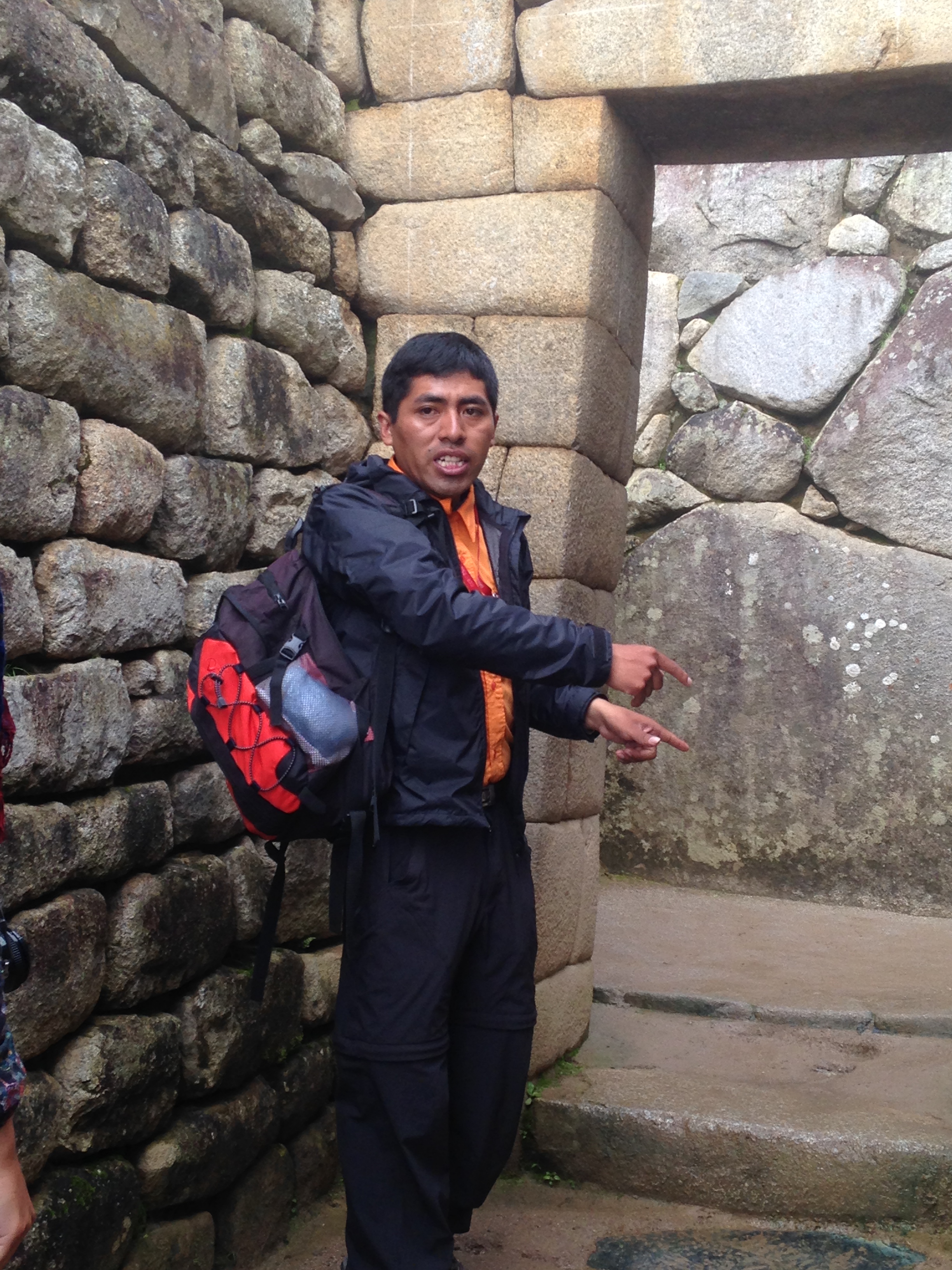
Julio, our guide was awesome!  Highly recommend having a guided tour for first 2 hours. You can spend the rest of the day roaming the ruins.

MP julio1

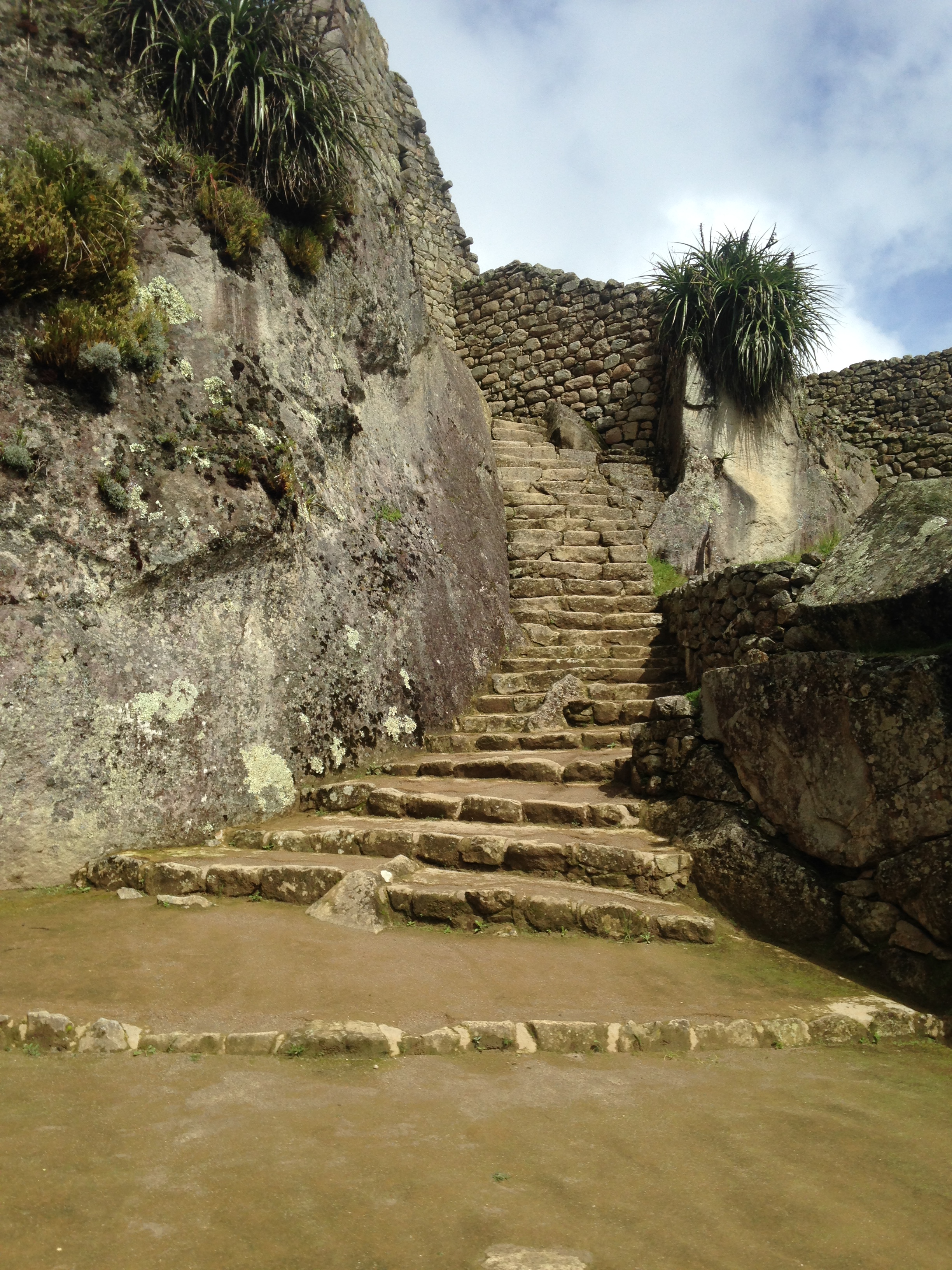
The stonework is amazing!

MP steps

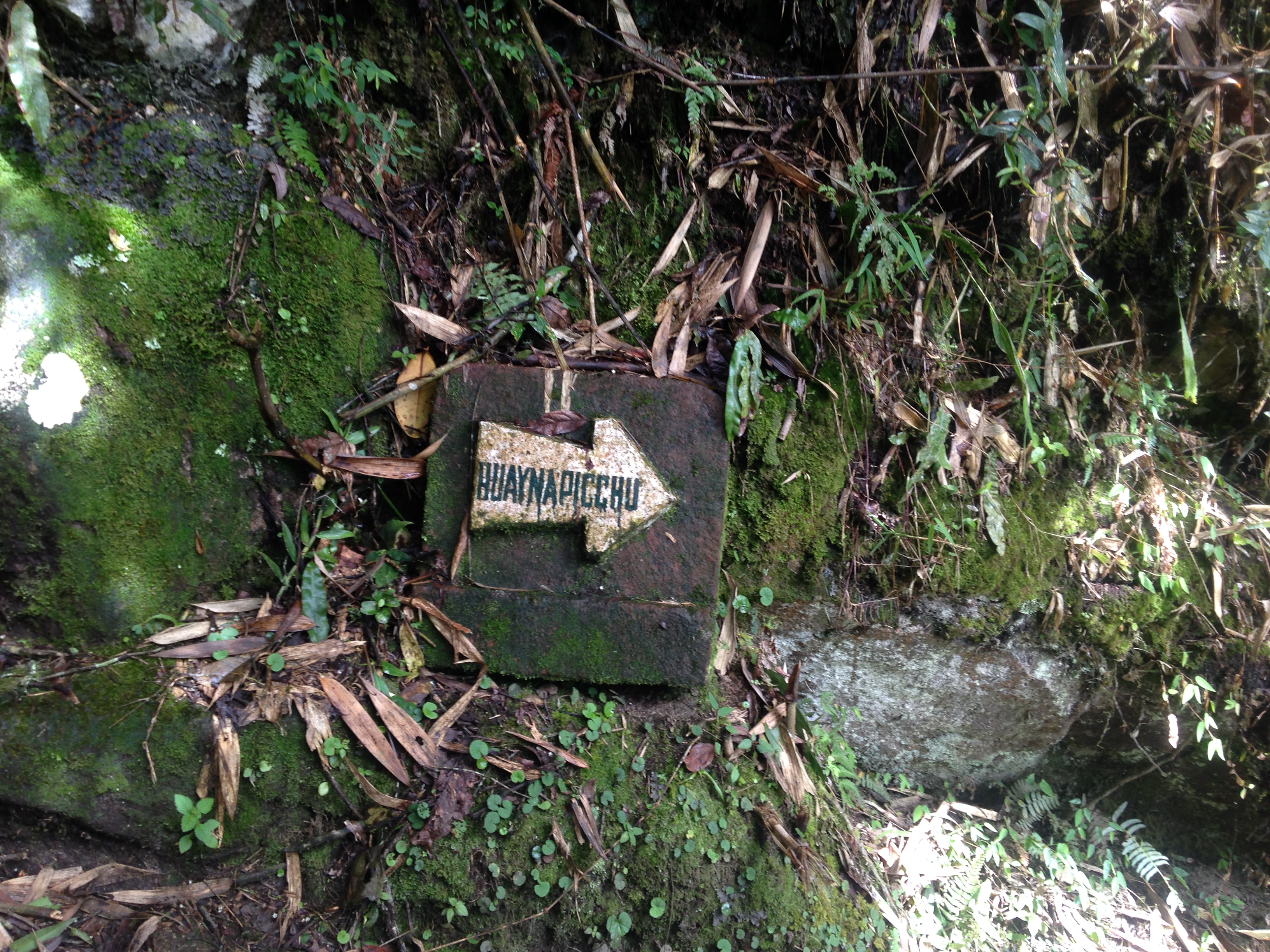
MP wynapicchu

The climb up Huayna Picchu was well worth the effort.

Up in the clouds on  Huayna Picchu

Up in the clouds on Huayna Picchu

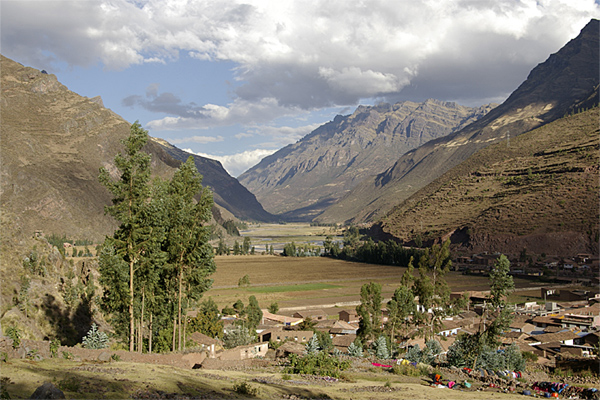
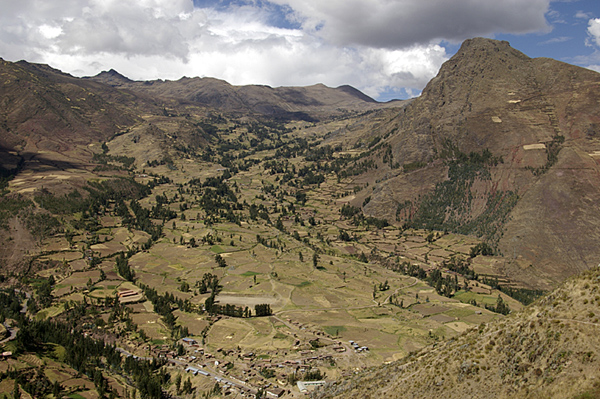
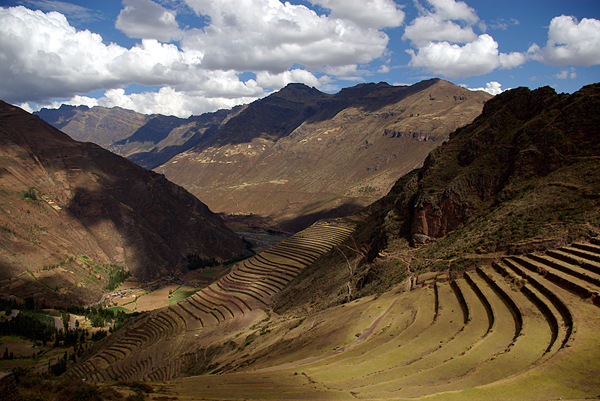
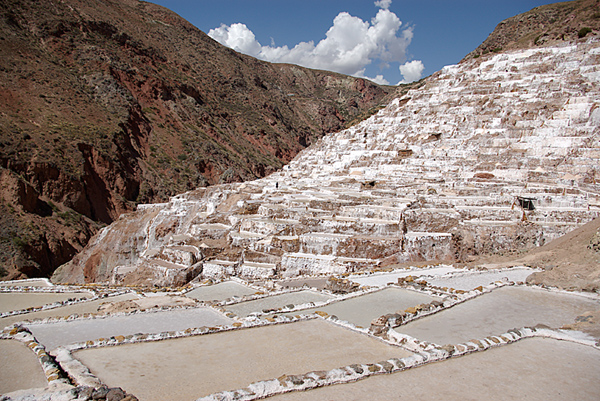
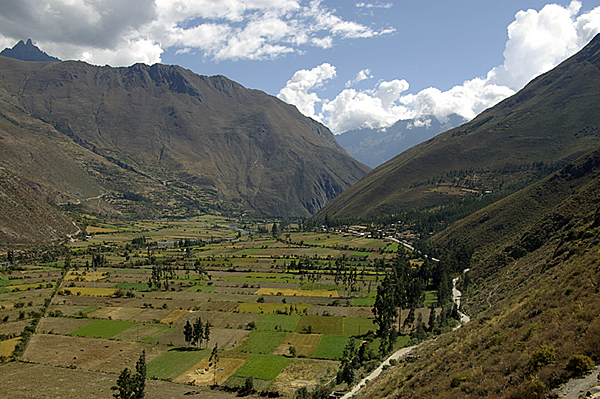
Sacred Valley

Video

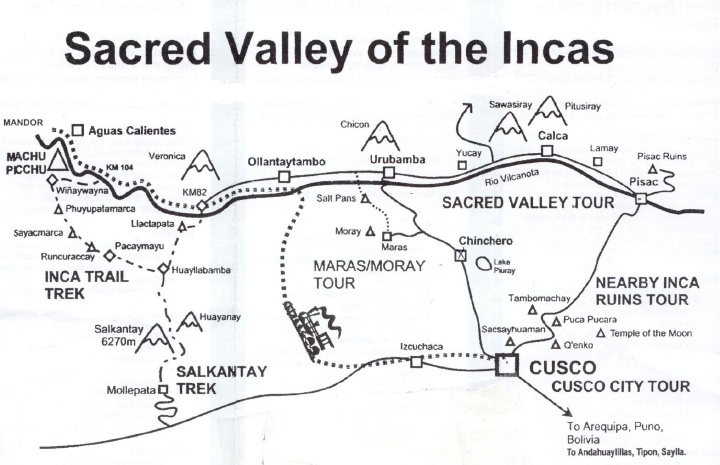
I was scheduled to start my trek on the Salkantay trail on Saturday. On Friday night Hilleria from Aita Peru came by the hotel to tell me that all trails were closed for 2 days due to a bridge that collapsed. They could take me after the bridge reopened. However, I had purchased Machu Picchu tickets for Wednesday and there were no tickets available Thurs, and I was flying to Patagonia on Friday. She offered a few alternatives that would allow me to keep my present tickets to MP and visit the Sacred Valley, then catch the train from Ollantaytambo to Aguas Calientes, hike to Machu Picchu on Wednesday.
A.SacredValleyMap


 Sacred ValleySacred valley

 Pisac

pisac acoss from ruins


Pisac Ruins

pisac5


Salinas Uruamba

salinas Uruamba


Ollantaytambo

Cusco Olytantambo


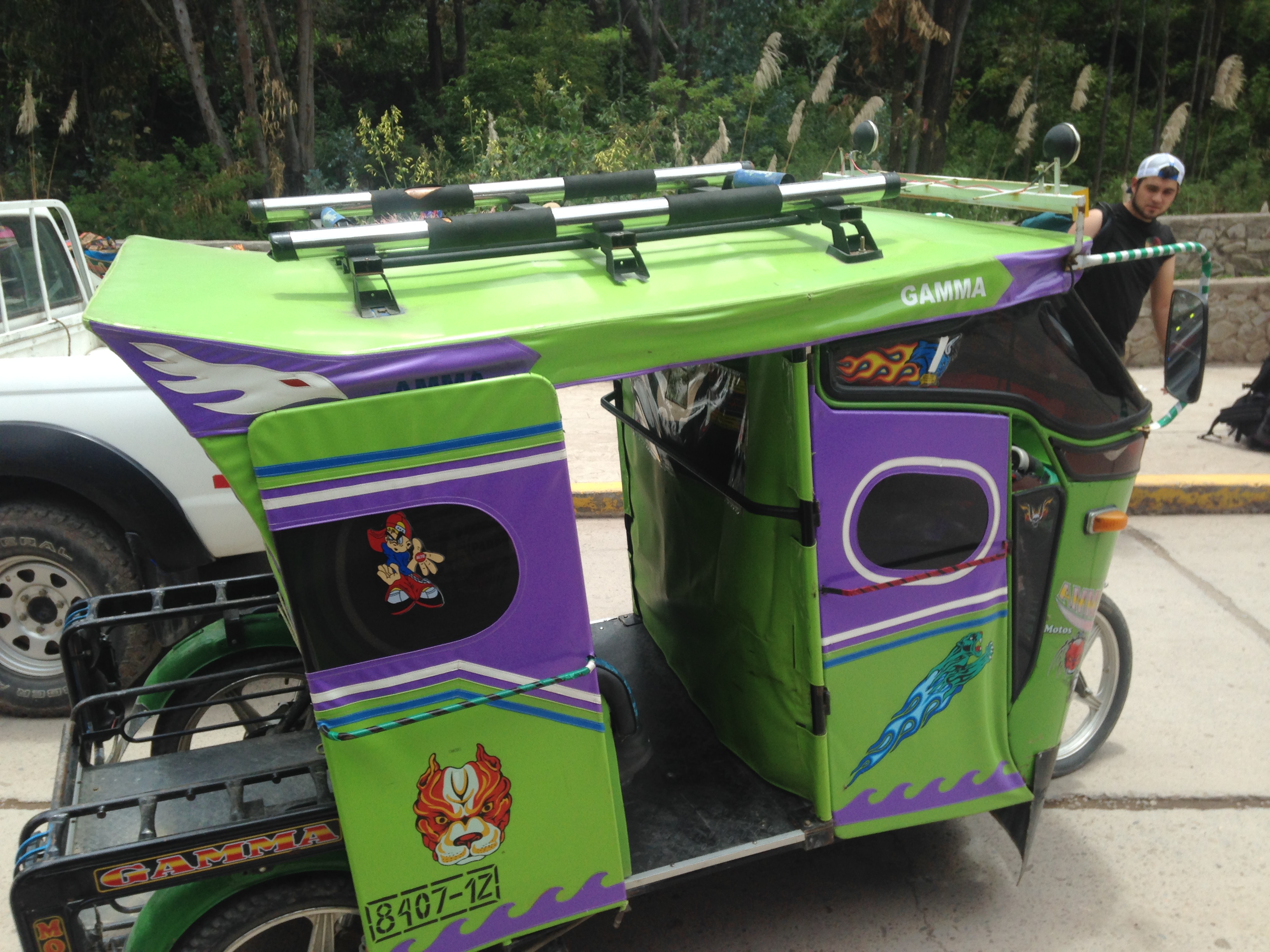
 Cart du jour in Ollantaytambo. A 3 wheel motorcycle with body.

Green Cart

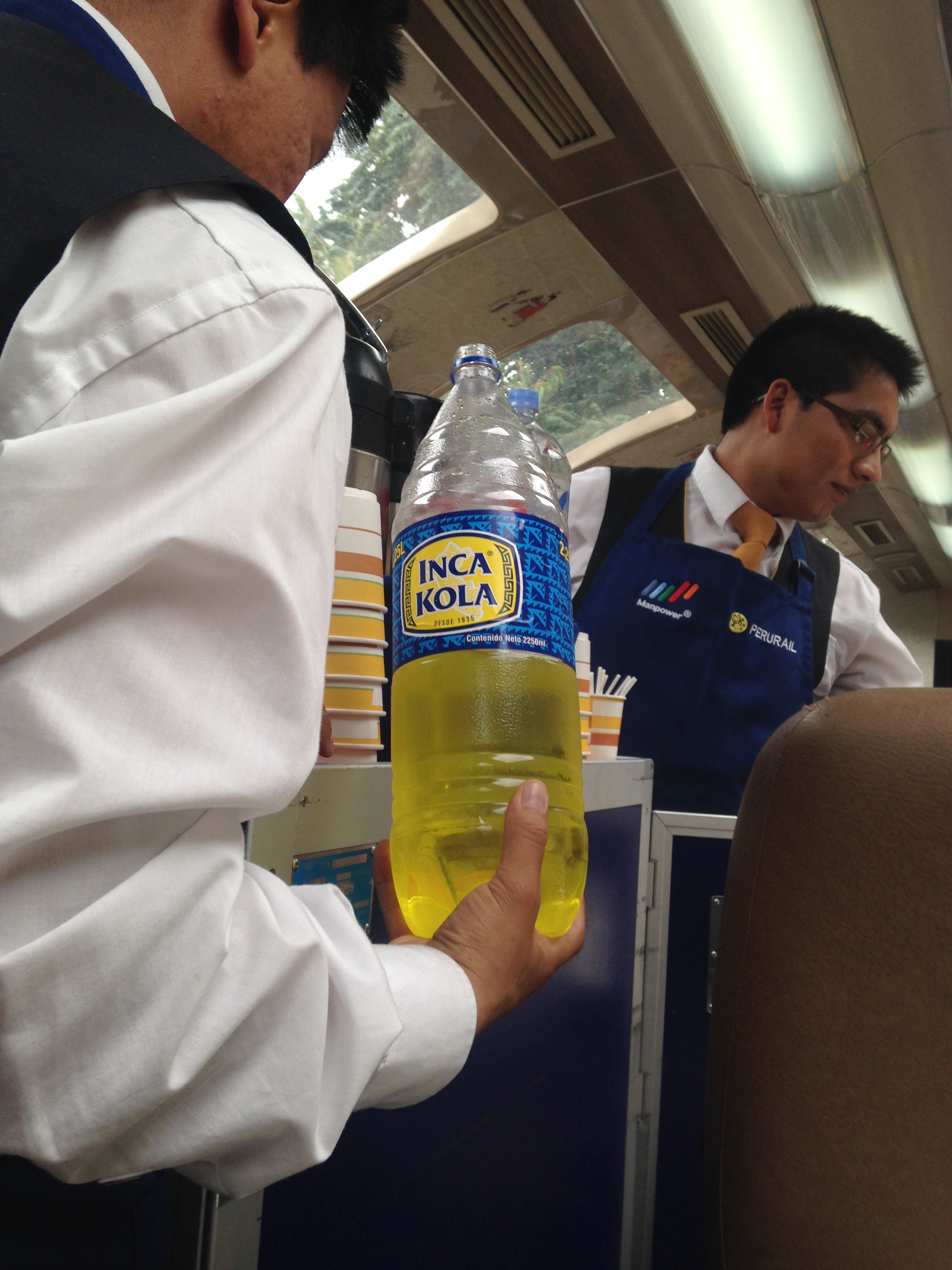
Peru Rail operates the train from Ollantaytambo to Aguas Calientes. Everyone was drinking Inca kola. If you take the train, get a window seat the view of the valley is beautiful.

Inca cola

Cusco – The People

I loved the mountains surrounding Cusco and I could hardly believe that I was looking at architecture that was built in the 13th century and still standing. However, what I loved most about my visit were the local people who took time to talk with me and who showed me kindness during my brief stay.

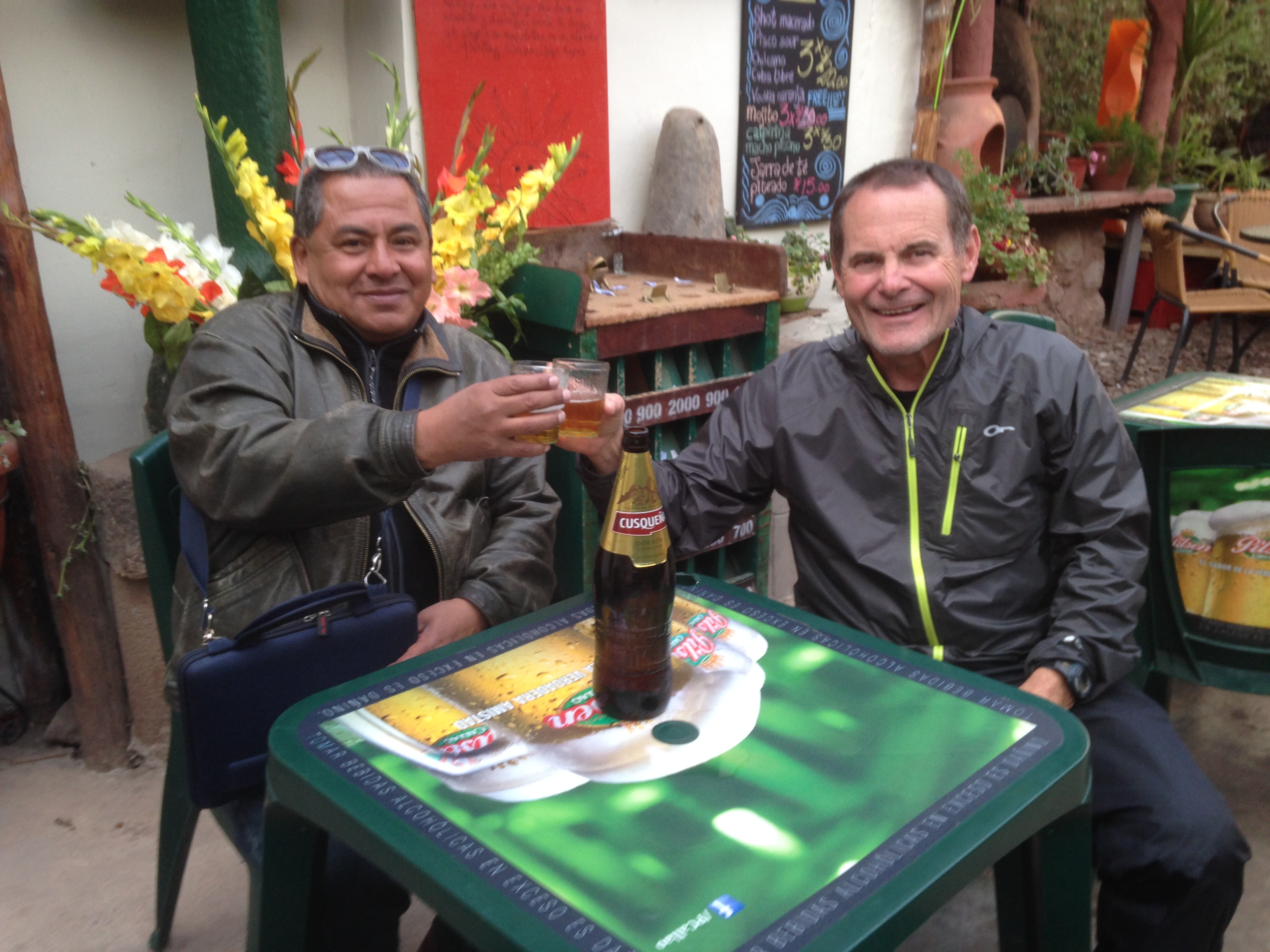
I met Miguel on my first day in Cusco in the Plaza de Armas. He spoke better English than I did Spanish but that didn’t stop him taking the time to answer my questions about the city and culture. When he found out that I enjoyed hiking, Miguel told me that I must come back and visit the Colca Canyon, Cordillera Blanca and Cordillera Huayhuash, Chachapoyas (Warriors of the Clouds), Pacaya–Samiria National Reserve in the Amazon. He took the time to describe each and typed the name of each location in my smartphone notepad for me.  I saw Miguel again on my last day in Cusco.  He called my name as we passed on the street and I told him that it was my last day in Cusco. He insisted we go have a going away beer, which he poured and I paid for….I thoroughly enjoyed the brief time I spent with Miguel listening to him enthusiastically tell me about his beautiful country.

2015-03-05 16.45.47


Flute and Charango


IMG_1861


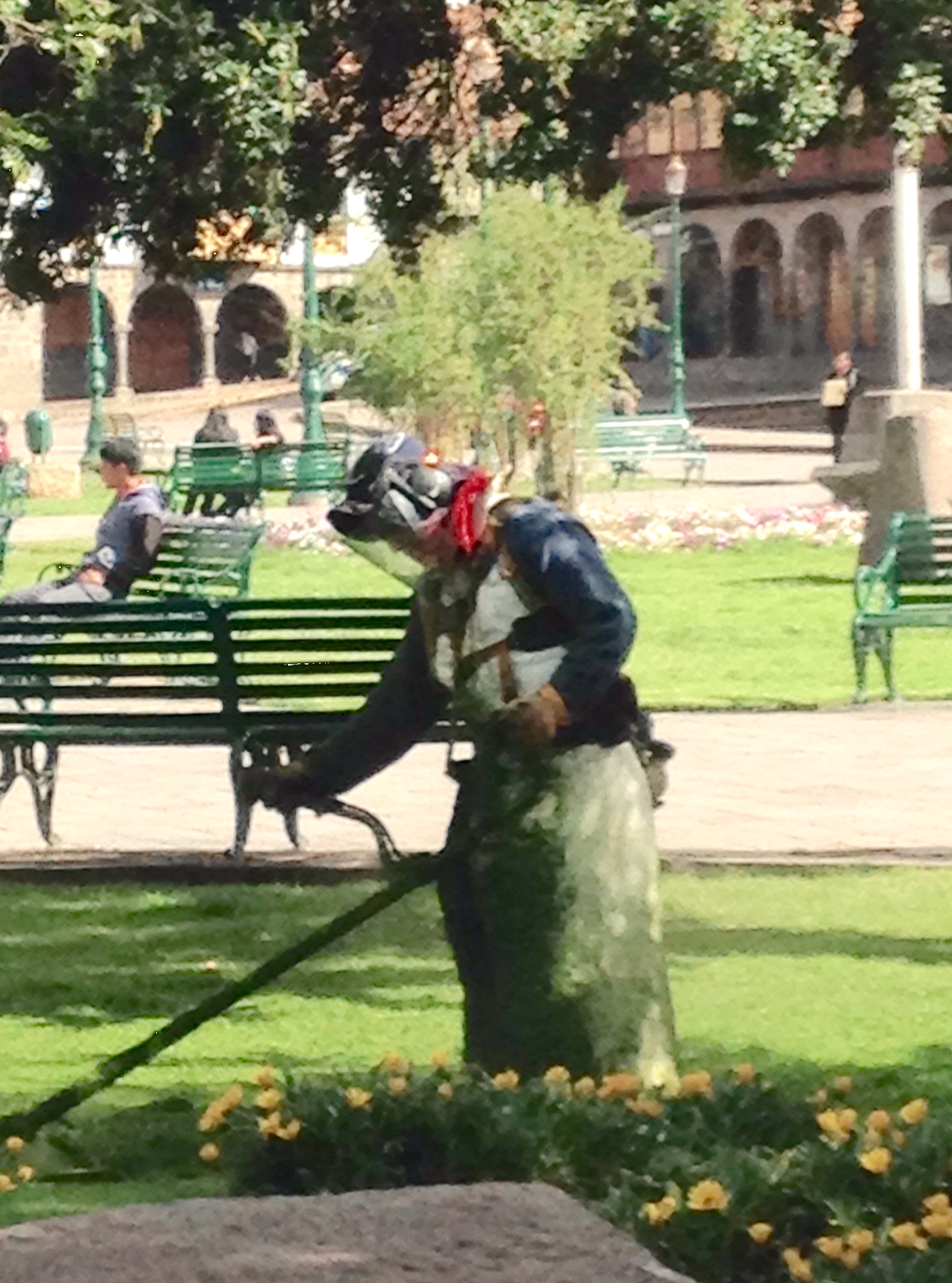
Weedeater in Plaza de Armas.

IMG_1821


Late for work. Rushing through the Plaza de Armas

IMG_1822


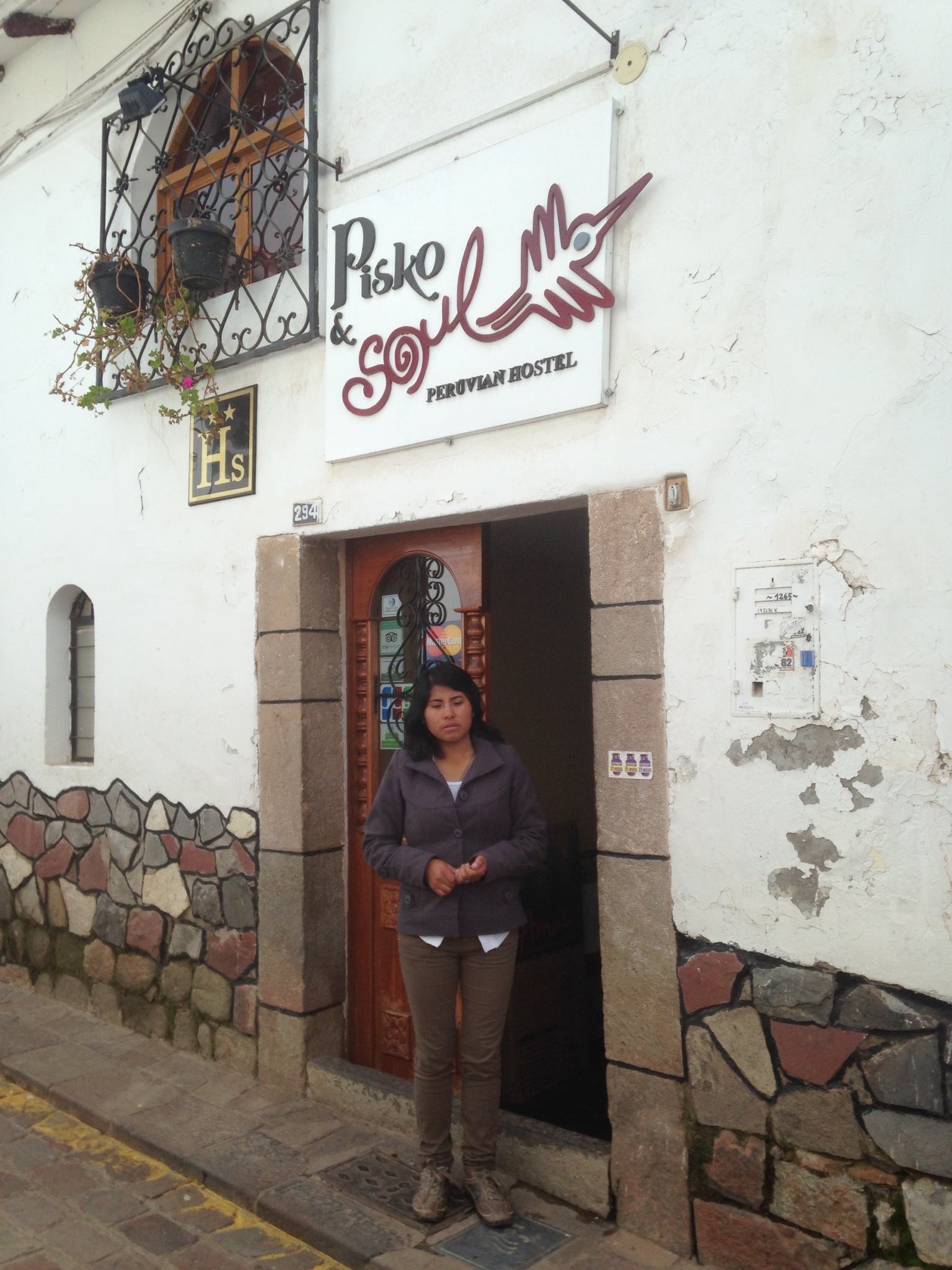
Maria Abella Sanchez Fernandez, the day manager at Pisko & Soul. My “go to” person.

2015-03-06 08.11.42


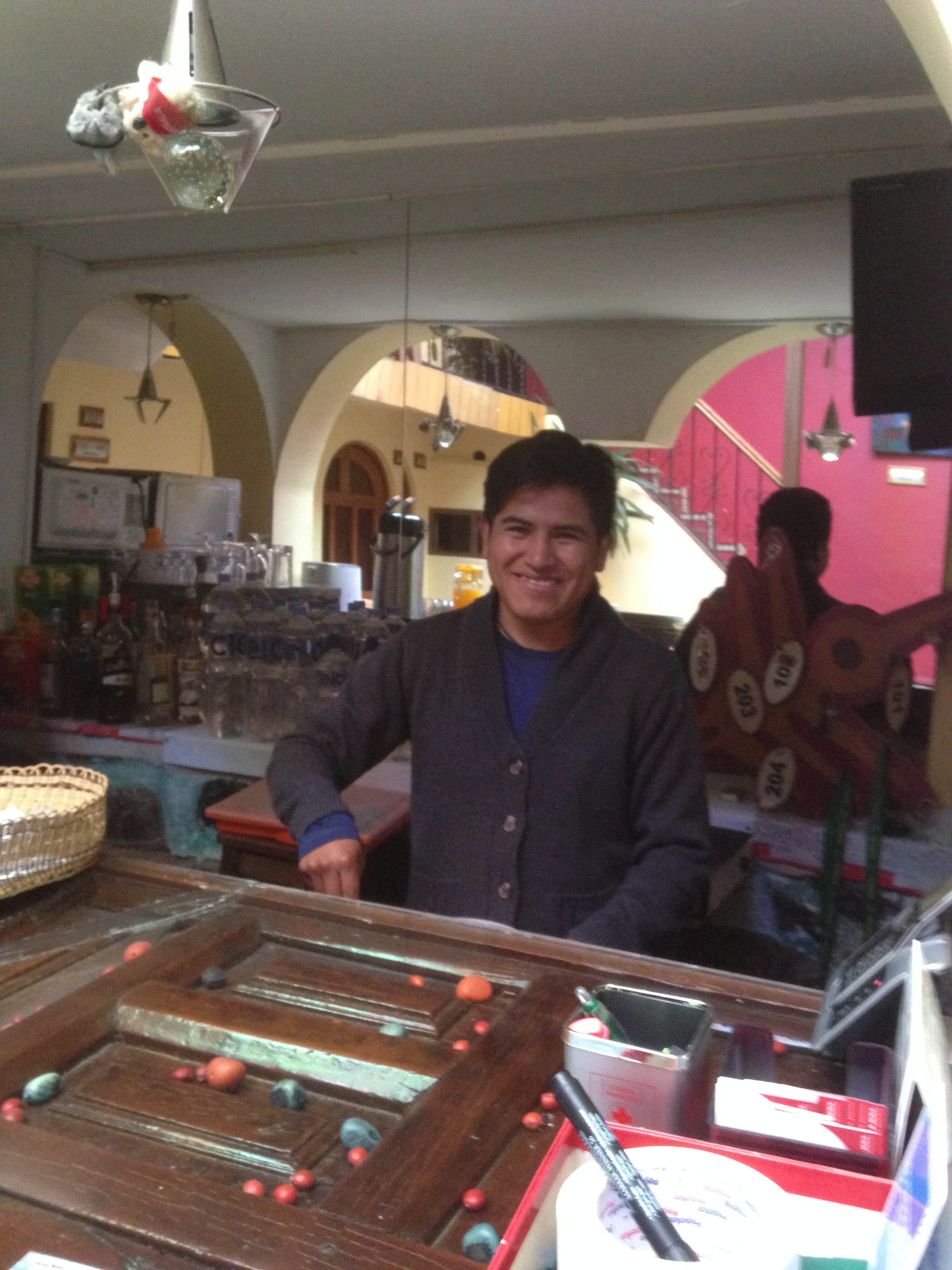
Jorge, Breakfast Cook at P & S. In addition to Mate, he had hot coffee ready for me each morning!

2015-03-05 07.35.09

Cusco – The Food

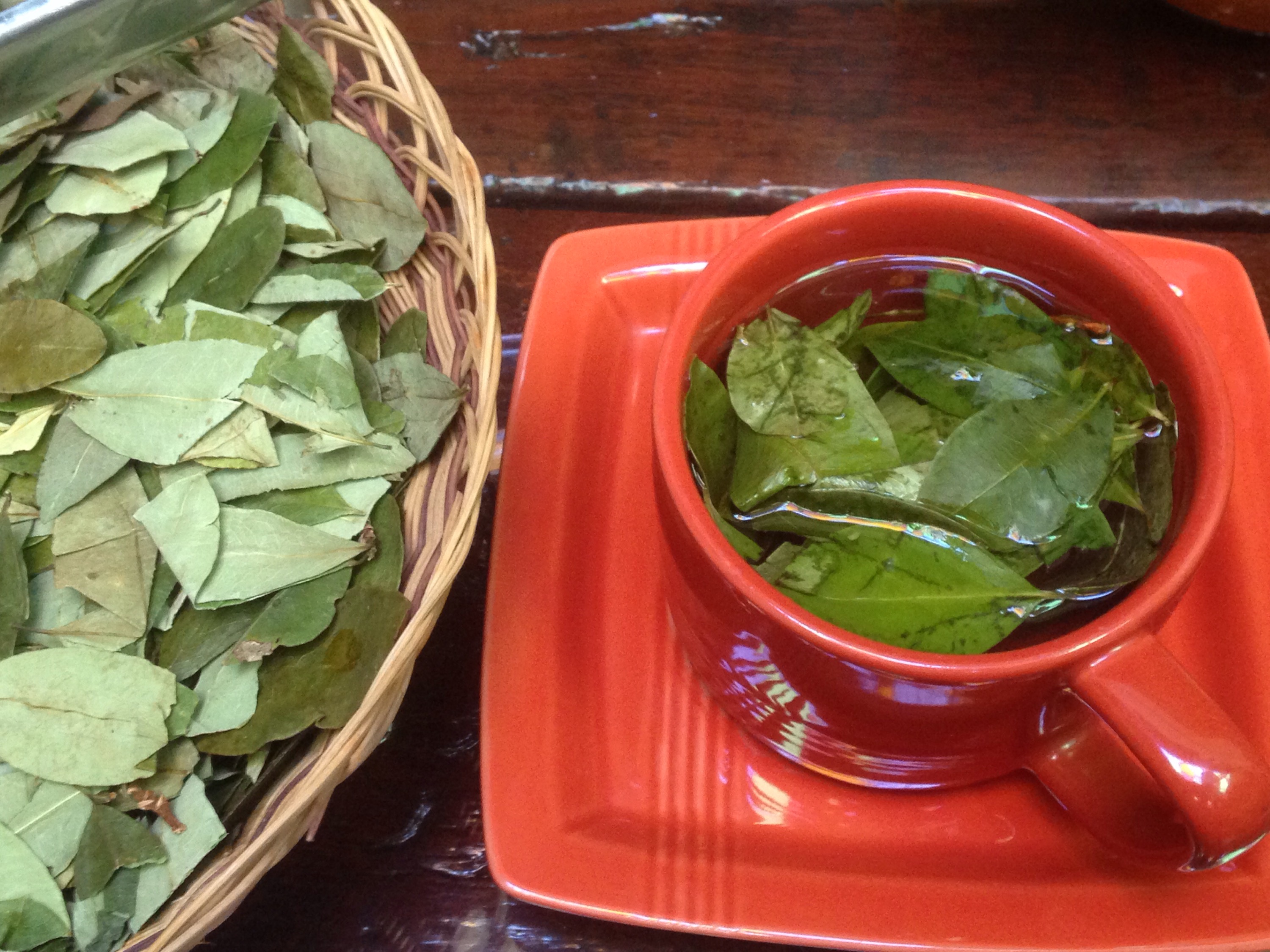
Coca Tea 

IMG_2091


There is also a food court in the Market that serves local dishes at a fraction of the cost of most local restaurants.  Although the sanitation borders on disgusting, I did eat lunch and dinner there for 3 days without getting sick!  Here’s where my restaurant background allowed me to enjoy some great Peruvian cuisine and live through the experience unscathed.  My epicurean rules of engagement:  Look for crowded vendors. (I mean standing room only with local diners). Assume that none of the vendors have washed their hands within the last hour. The food must come out of a steaming hot pot and be served with a spoon. NOT their hands. Served immediately. This eliminates any cold foods or food served at room temp. No food prepared in advance.  My only hope was that the serving pot would be at least 180*F  to kill any bacteria cuties.

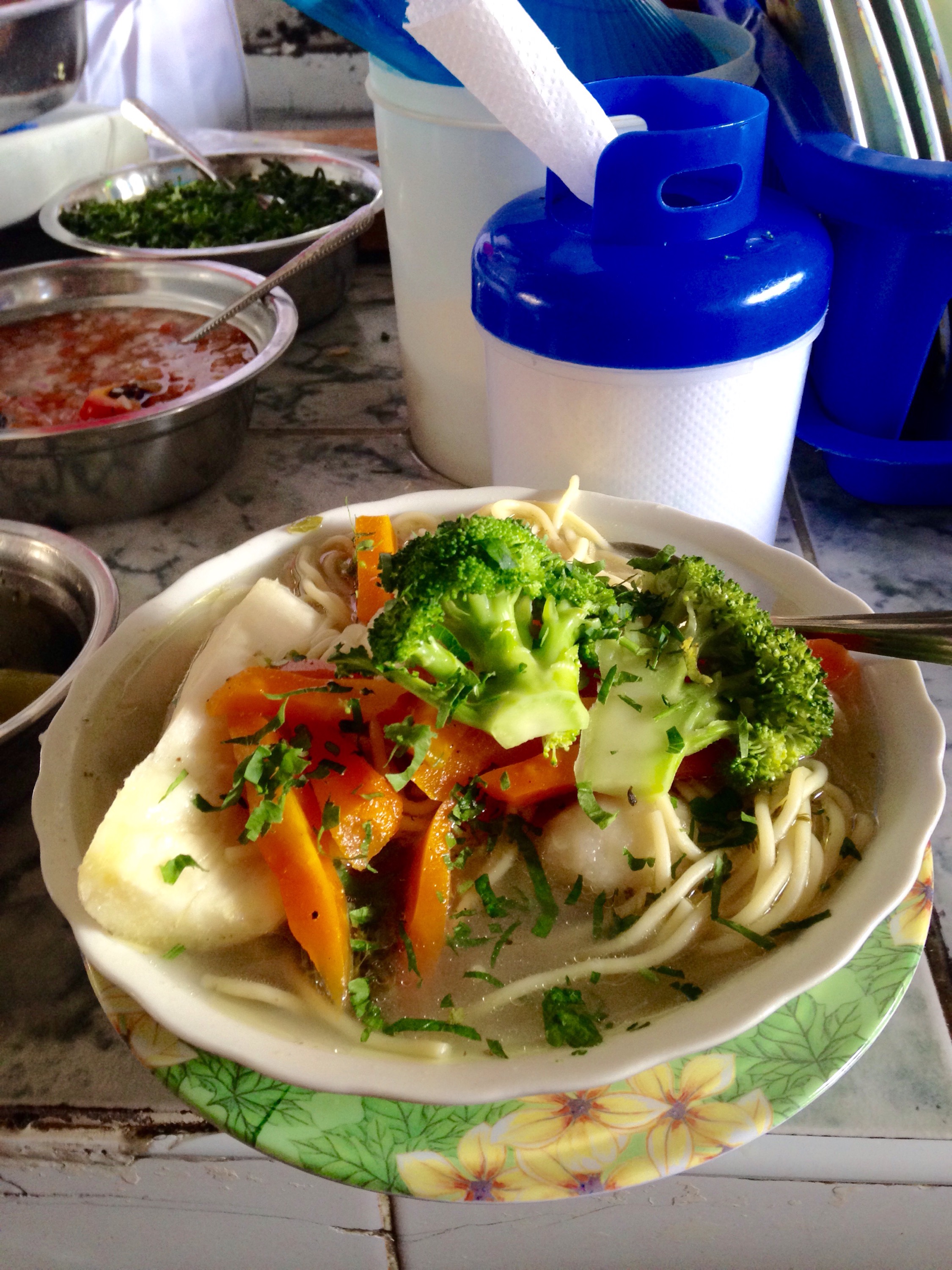
Sopa Pollo -Fantastico!   5 Nuevo Soles = $1.61 (I had this soup every day)

IMG_1833-0


Huevo con Arroz – 5 Nuevo Soles – Lot’s of starch here but filling and cheap.

IMG_2107


IMG_2100

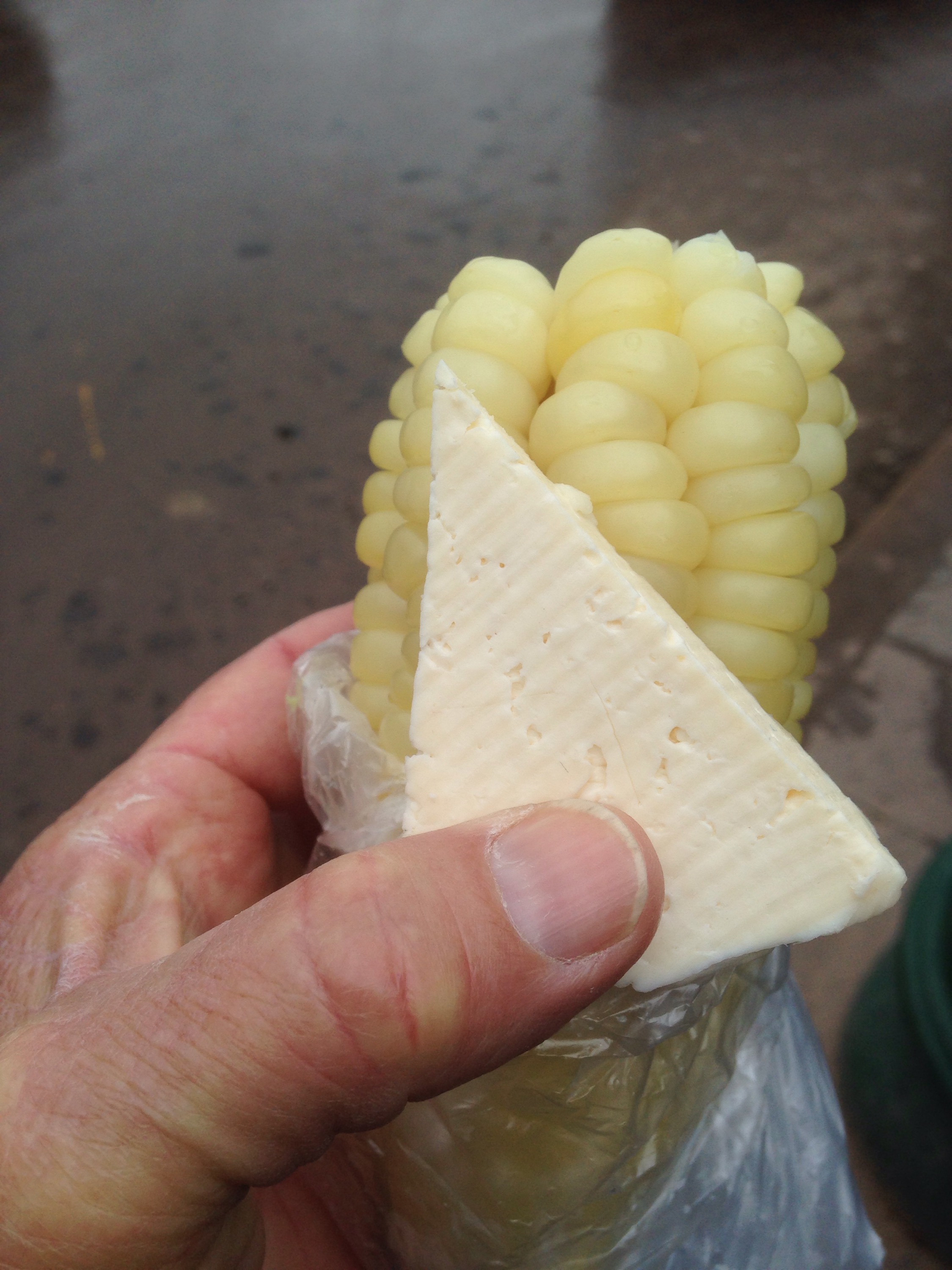
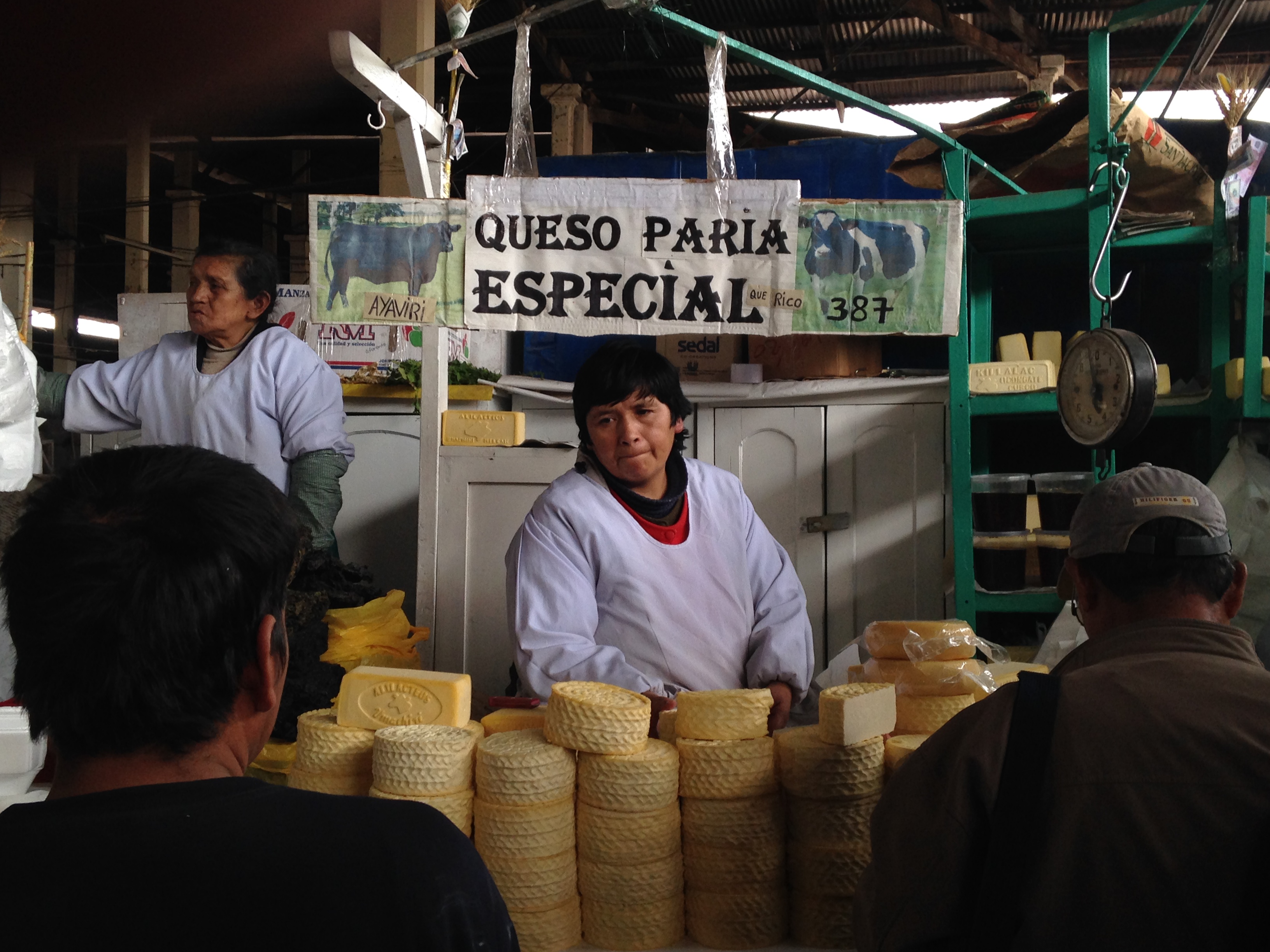
Peruvian Cheese

Cusco Market -Paria

Cusco – Mercado Central de San Pedro


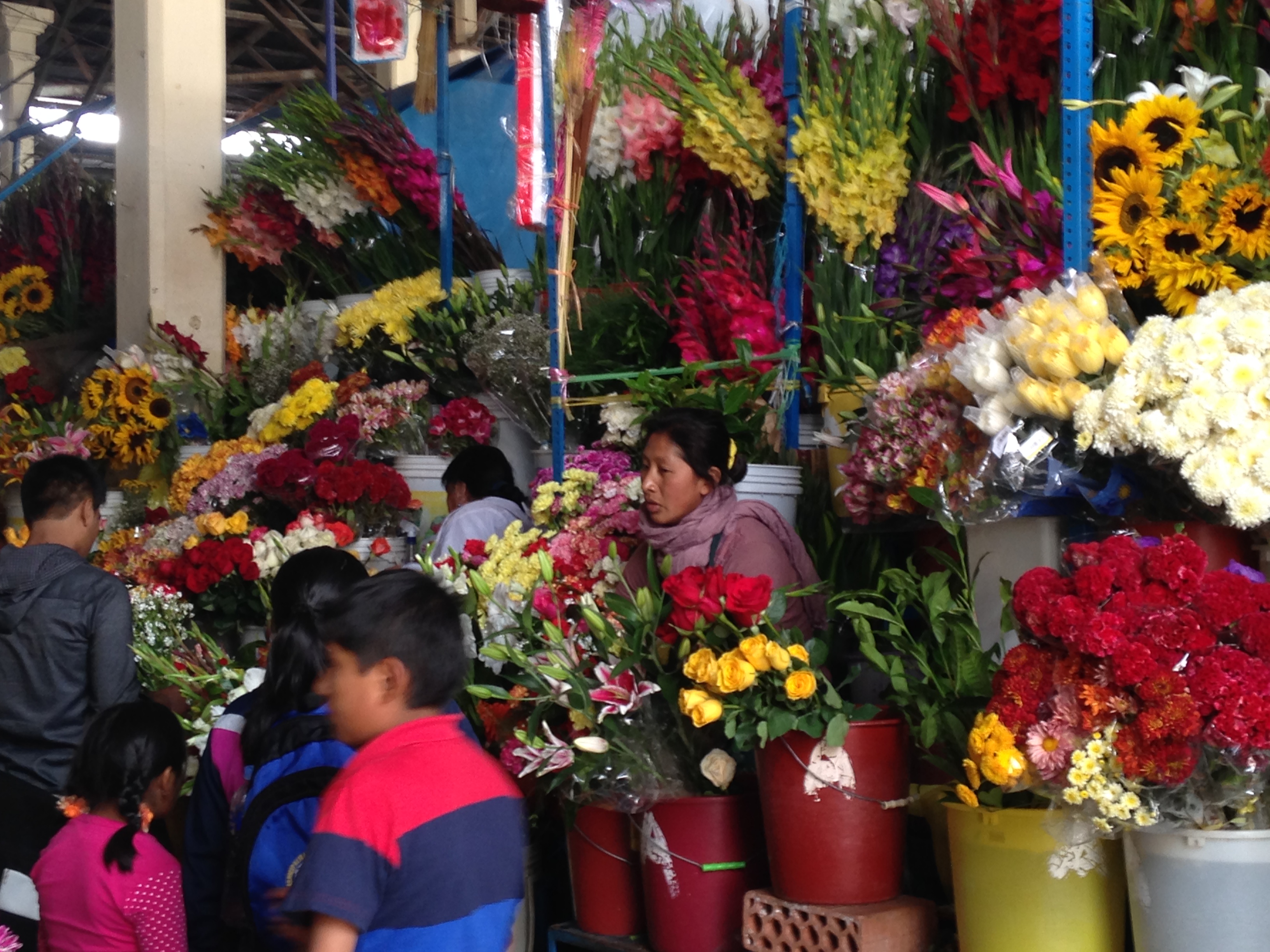
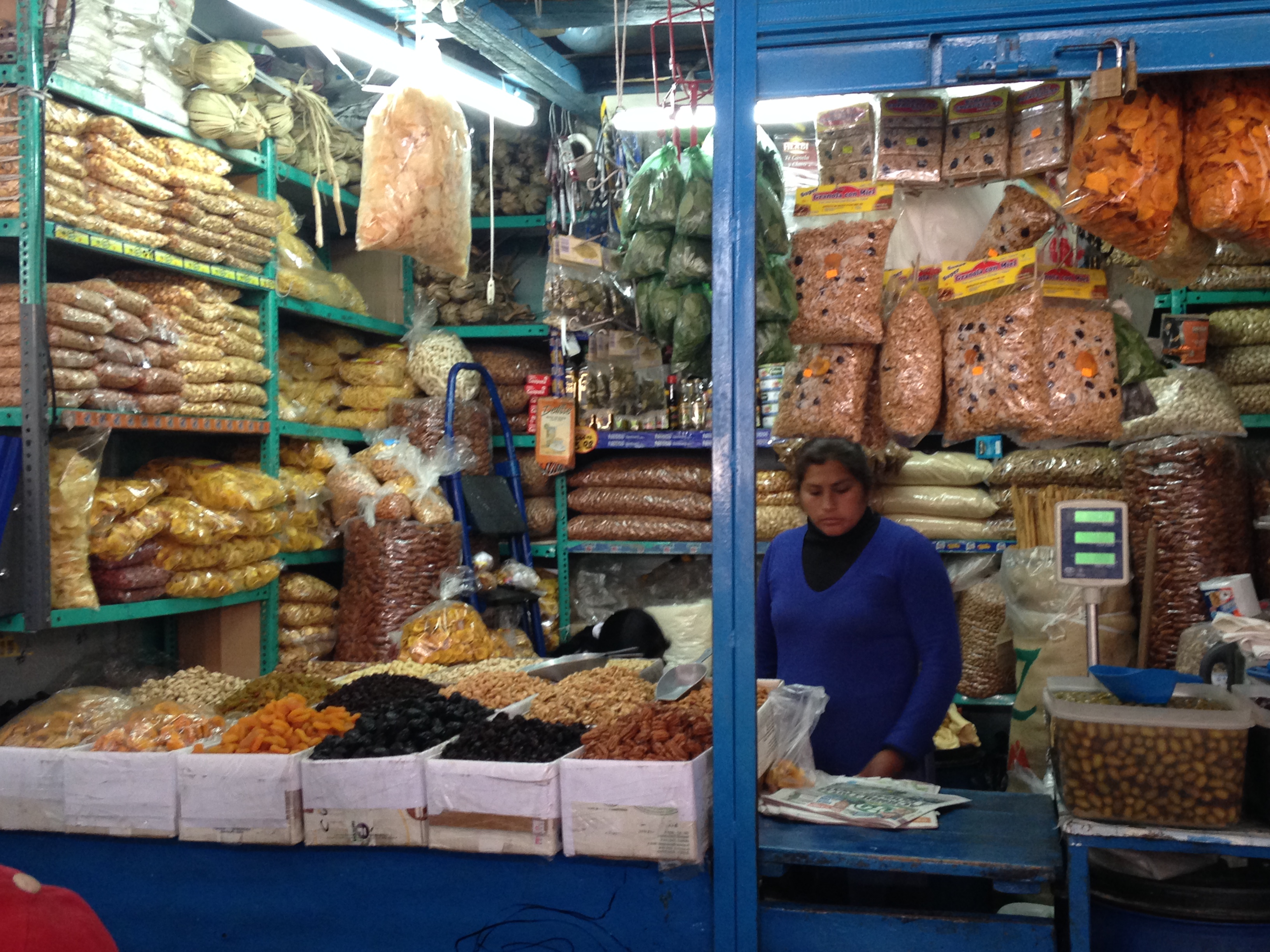
The San Pedro Market is the place where locals gather and go for their groceries. Everything was on display and I loved hanging out there. Just wandering around the stalls with towers of fruit, mounds of baked breads, spices, seeds, fresh flowers, and handmade crafts, alpaca bags, hats & sweaters and fried guinea pigs (cuy) and pig heads on the adjacent aisle.   It was an inside look at Peruvian everyday culture.

Cusco Market Flowers Blow up2


That’s right! Just around the corner from the flower lady
IMG_2109


Cusco Market - Grain


Cusco – Double Rainbow

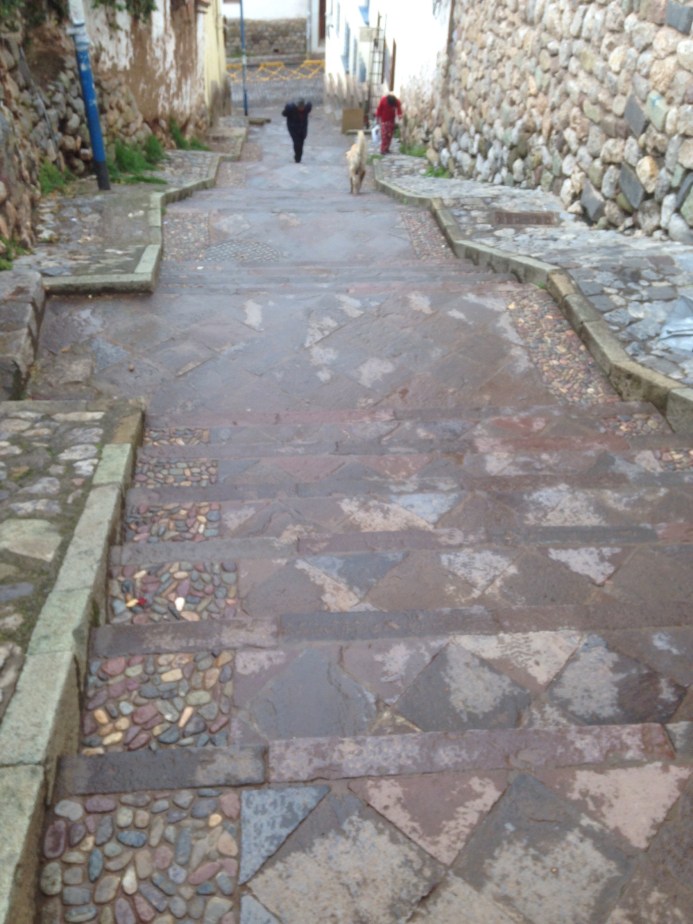
After breakfast I headed into town to walk the streets and look around. It rained all night and was still sprinkling as I walked down the series of steps. I was almost dreading my climb back to Piskol & Soul at the end of the day.

IMG_2103


Then I looked up and saw my first double rainbow!


Plaza de Armas

IMG_1935


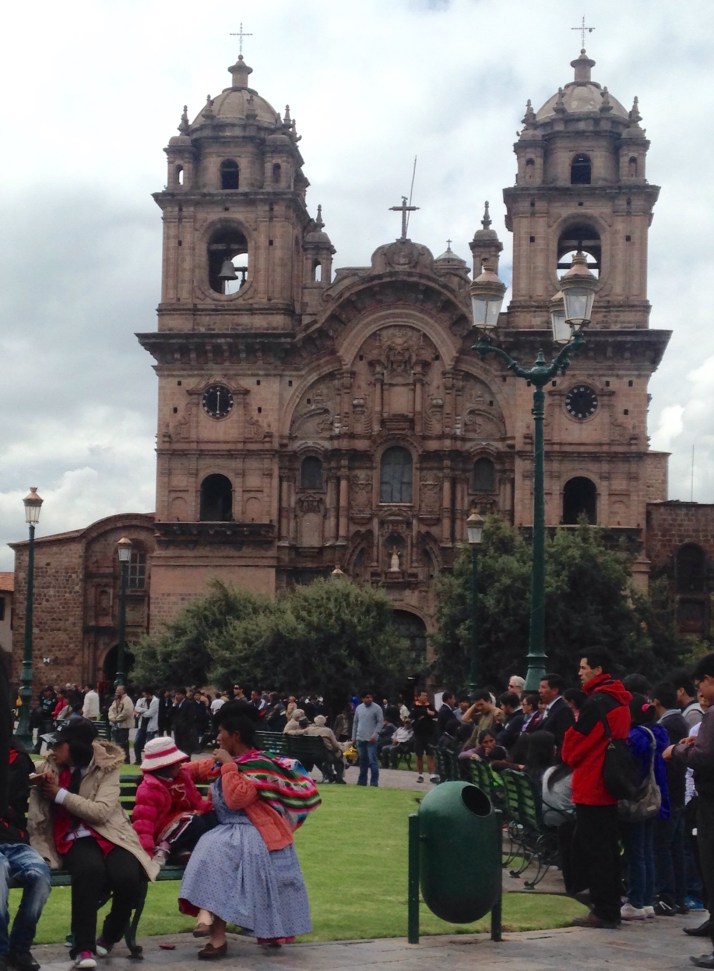
Cathedral Basilica on the Plaza de Armas

IMG_1905


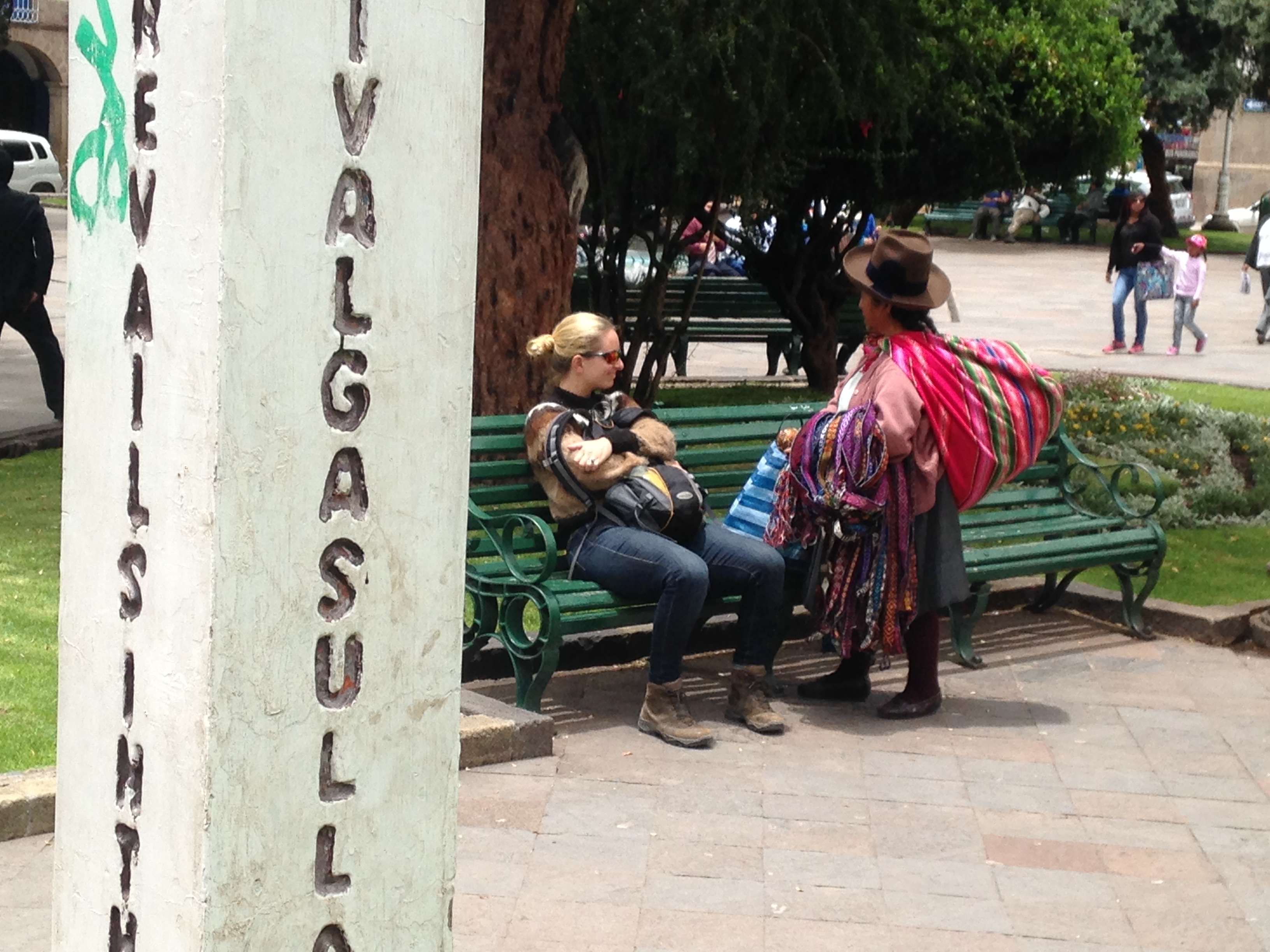
It doesn’t take long for the locals to spot a tourist.

Cusco Bench Ladies


 Cusco at sunset.

IMG_1958

Link

To get to Machu Picchu you must pass through the historic city of Cusco,  located in southeastern Peru, near the Urubamba Valley of the Andes mountain range at an elevation of 11,200 ft. I felt the difference immediately coming from sea level in Florida. The city has a population of approx. 400,000 and was the historic capital of the Inca Empire from the 13th to the 16th century until the Spanish conquest took place. The city is definitely a tourist hub and filled with travel and excursion operators servicing Machu Picchu and surrounding tourist destinations. Hawkers, selling mostly art and the normal tourist fare can spot a tourist immediately and…hearing the word “NO” just makes them work harder. However, I still found it fascinating to walk in the streets and look at architecture with such a rich history.

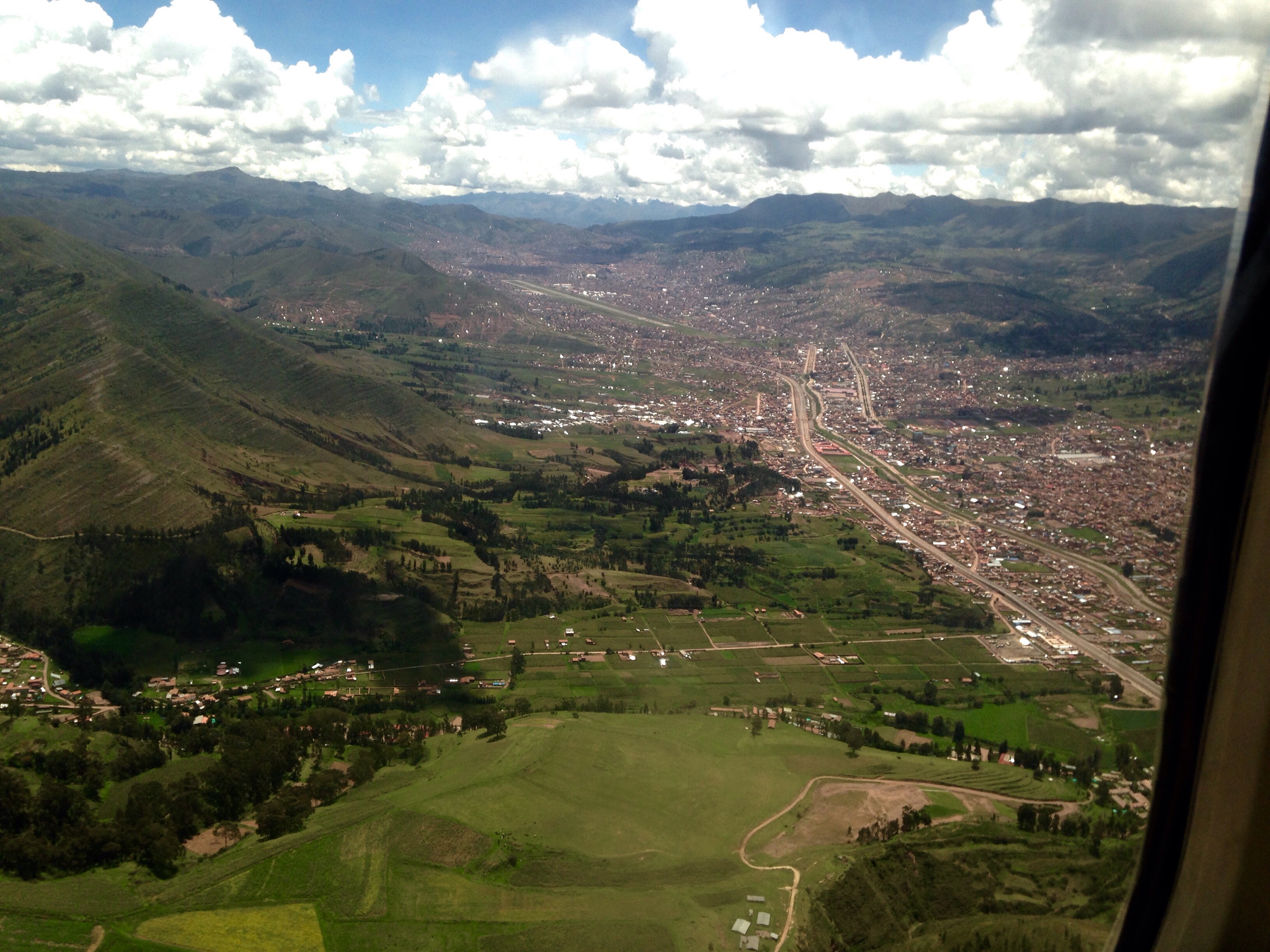
Flying into Cusco

Flying into Cusco

Cusco is a 1 hr flight from Lima. The search engines  only came up with Lan Airlines, who has several flights from Lima to Cusco daily for $250 round trip. However, I discovered Peruvian Airlines’ round trip was $99, AND they had a flight leaving 2 hours after my arrival in Lima. Perfect!

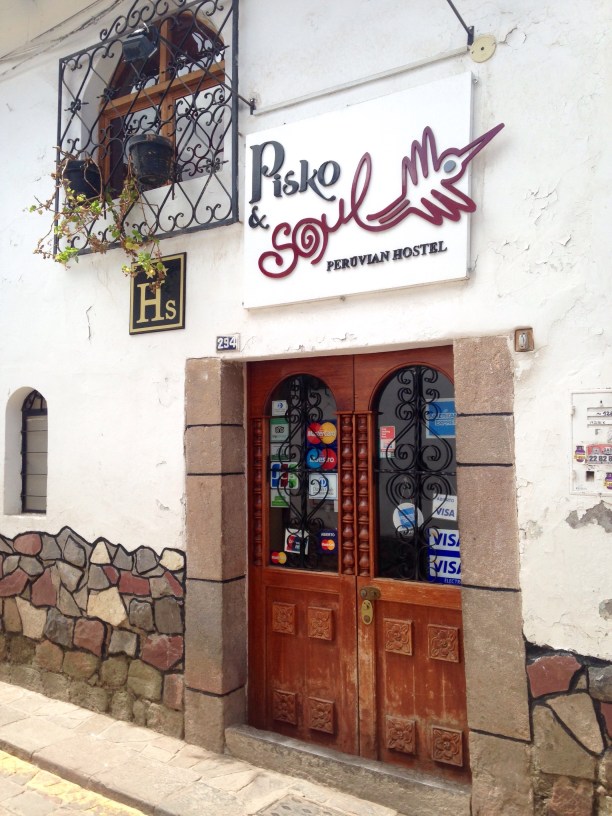
I made a reservation for 2 nights at Pisko and Soul Bed and Breakfast, $18 per night for a single room. The owner sent me an email stating that I should only pay approx 10 Nuevo Soles for cab fare from the airport. (Approx $3.20).  After arriving at the airport. I asked the first cab driver how much to the B&B and he said fourteen Nuevo Soles. I figured it was close enough and I climbed in.

The 20 minute cab ride to the B&B was interesting!


When we arrived at Pisko and Soul I handed the cab driver fourteen Nuevo Soles. He said it was NOT forteen but forty Nuevo Soles. I grabbed my bags and quickly walked through the front door of the B&B. I told him “no habla espanol”.  The driver elected not to follow me inside.

IMG_1919

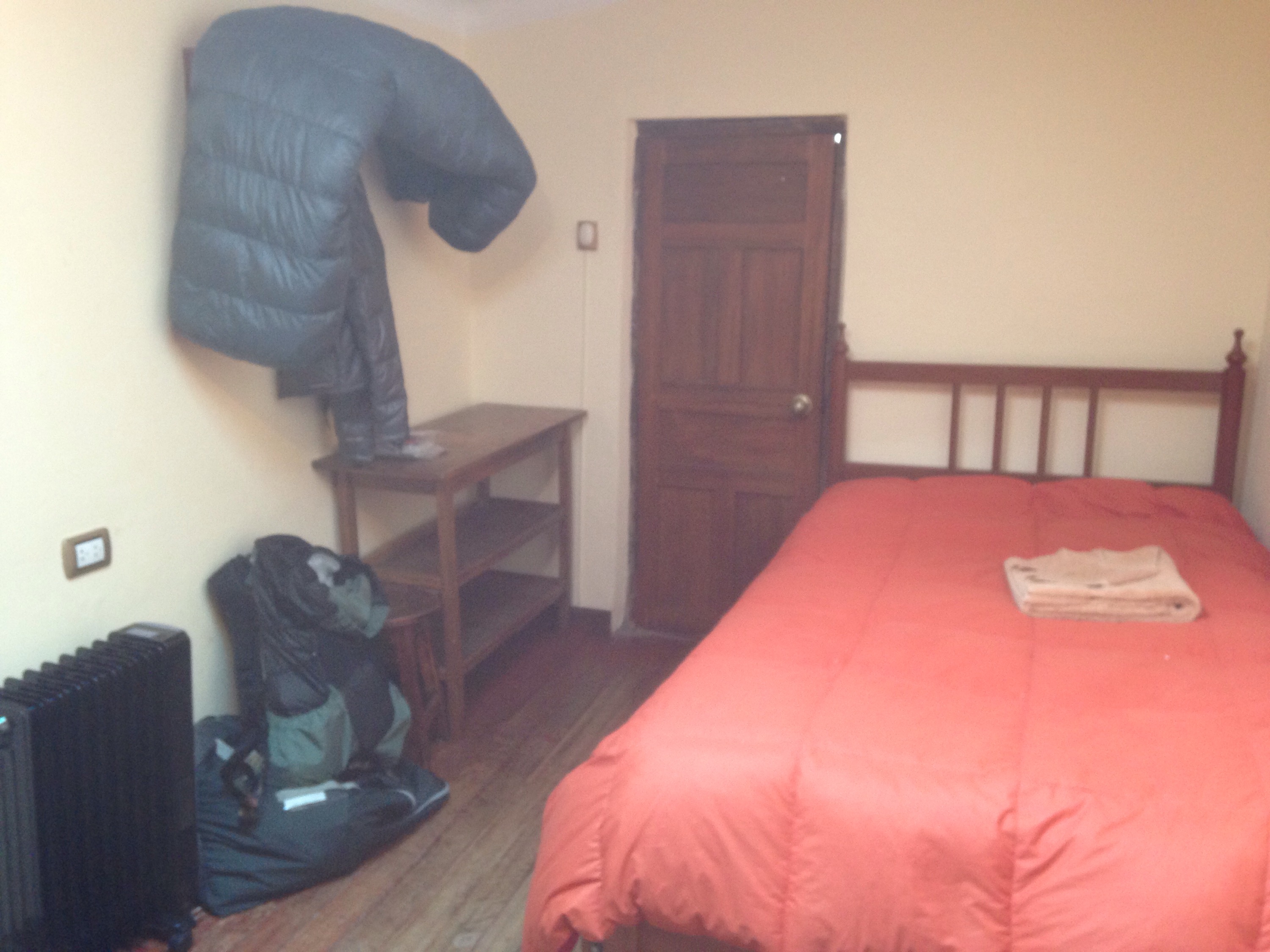
My room at Piskol & Soul  $18 per night, no frills and very clean.

IMG_2104

My original plan was to stay in Cusco for 3 days to get acclimated to the altitude before taking one of the many 4-5 day treks to Machu Picchu.  I thought it would be better to sign up with one of the guided treks so that I could learn more about the history of the area leading to MP. After checking in I walked down to the Plaza de Armas, and met with some excursion operators and travel agencies. To see if I could line up a trek to Machu Picchu.

After meeting with 3-4 agencies located near the Plaza de Armas, I signed up for the 5 day Salkantay Trek read more to Machu Picchu, as the famous Inca Trail is closed during the month of February.  The total cost of this trek was $230, including food, 1 night hotel in Aguas Calientes, Machu Picchu & Wayna Picchu tickets and train back to Cusco. (This price was substantially less than if I had booked in advance online and much less since February is off season).

Screenshot (18)

South America

Over 20 years ago I was invited to visit Machu Picchu by a co-worker and friend, who  grew up in Peru. I was unable to make that trip, but after seeing his post trip pictures, I put MP on my bucket list.

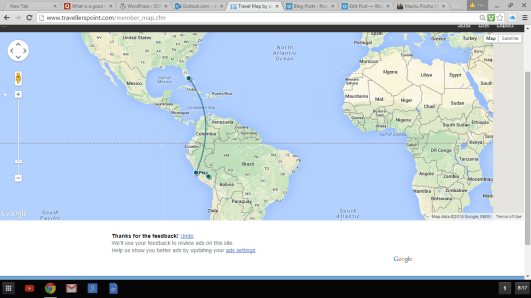
Through the years, I had also been reading about Patagonia in the southern Andes and knew it was time to bring my bucket list to fruition. While doing some research, I found a cheap round trip flight to Lima, Peru from Miami, FL. (Under $400). I immediately bought the ticket and started putting a trip together that would include both Machu Picchu and backpacking in Patagonia.Screenshot (17)

Expenses:  My total budget for 5 weeks in South America was $2500 .

As the rainy season in Peru is February, my first preference was to visit Patagonia in late February/early March then, visit Machu Picchu the end of March. However, the airfare costs quickly doubled with this scenario, so I decided to take my chances and  visit Machu Picchu the last week in February and hope for a clear day or a break in the clouds to sneak a view of the ruins. I didn’t think one week, either way would matter in Patagonia, even though it would be towards the end of the hiking season and winter would be just around the corner.

By traveling in the off, or shoulder season I was able to keep my total expenses below $2,500 for the entire 5 week trip. I spent 8 nights in B&B, hostel or guest houses. The rest of my nights were spent in my tent in campgrounds. I made all of my reservations in advance through Booking.com or Hostelworld.com only after reading guest reviews, insisting each hotel have an average review of 8.5 or higher. All were under $25 per night, except in El Chalten, where I paid $48 for a single room B&B. I also only stayed in accommodations that served free breakfast and had kitchen facilities so that I could pre portion my meals before backpacking and cook my dinner during my stay.  I was able to get a private room for 6 nights and I shared a dorm room for 2 nights with other backpackers. I loved each of the places that I stayed, as I met other backpackers from all over the world who were very helpful in sharing information on trails, campsites and “must see” places for my next destination.